
Migraine Warning Signs: Symptoms You Should Never Ignore
- Medically Reviewed By Dr. Miguel Ley Nacher - MD, MSD, PhD | Consultant Neurologist
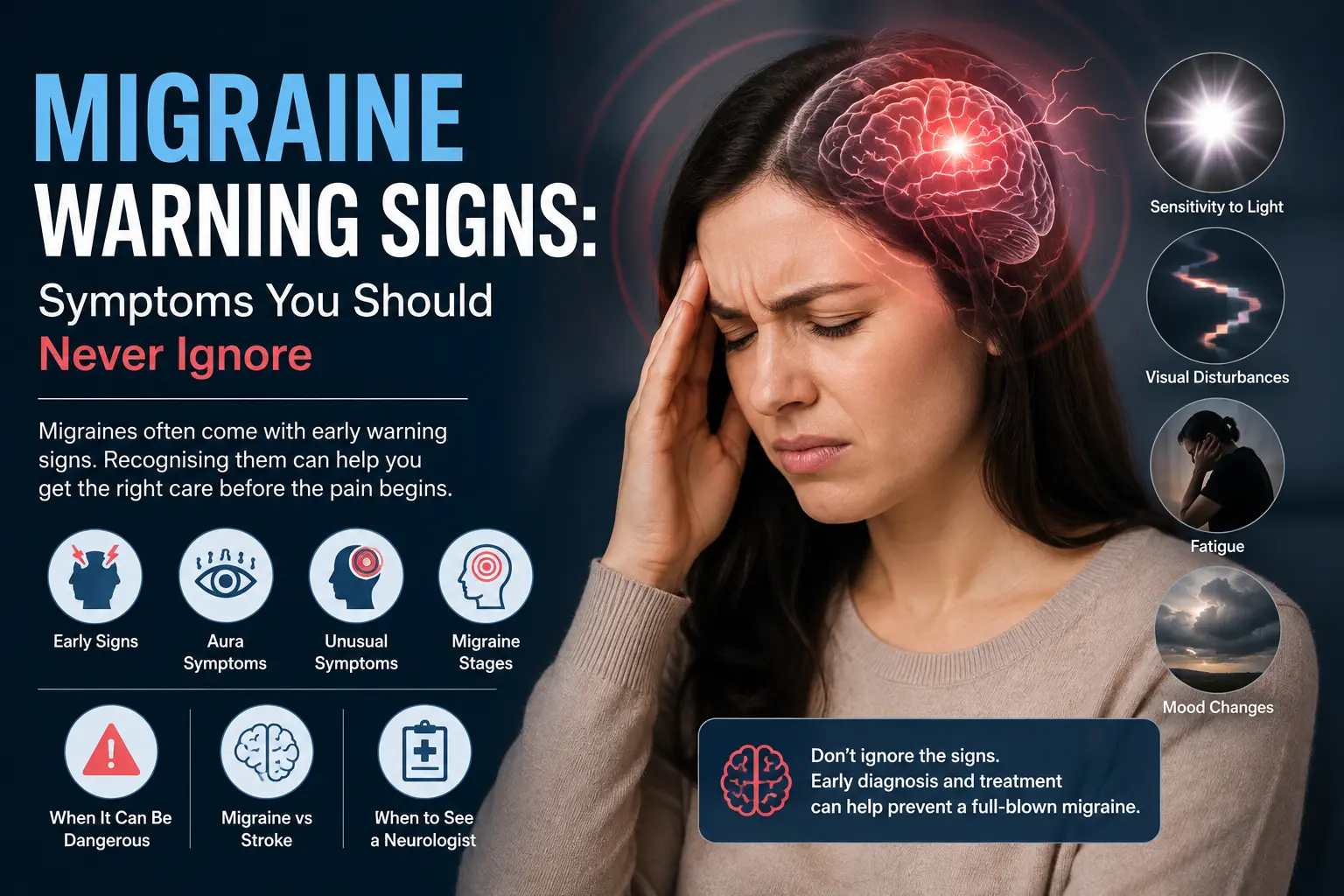
Many migraines are preceded by warning signs, sometimes appearing hours or even a day before the pain begins. However, not everyone experiences these symptoms.
In most cases, the body sends signals hours or even a day before the pain begins, yet these migraine warning signs are often mistaken for tiredness or a passing mood.
Learning to recognise migraine signs and symptoms early can make a real difference, allowing treatment to start before an attack takes hold.
Understanding Migraine Attack Stages
Migraines unfold in distinct migraine attack stages, though not everyone experiences all of them or in the same order.
- Prodrome: subtle changes that begin hours or a day before the headache.
- Aura: temporary sensory disturbances, most often visual, occurring in around a third of people with migraine.
- Headache: the main pain phase, often throbbing and one-sided.
- Postdrome: a lingering low-energy phase sometimes called the migraine hangover.
Recognizing the stage helps guide treatment and explains why early signs of migraine attack stages can look very different from the headache itself.
First Signs of a Migraine: The Prodrome Phase
The first signs of a migraine often appear well before any pain, which is why they are easy to dismiss. Common prodrome symptoms include:
- Unexplained fatigue or yawning
- Irritability or mood swings
- Neck stiffness
- Food cravings, particularly for sugar or salt
- Increased sensitivity to light or sound
- Difficulty concentrating
These early signs of migraine attack signal that an episode is building, giving an important window to intervene with medication or rest before the headache phase begins.
Migraine Aura Symptoms: What To Watch For
Migraine aura symptoms develop gradually over five to twenty minutes and usually resolve within an hour. The most recognized include:
- Flashing lights, zigzag lines or blind spots in the vision
- Tingling or numbness, often starting in the hand and spreading up the arm
- Difficulty speaking or finding words
- A sense of pins and needles on one side of the face
While visual aura is the most common form, some people experience aura without any accompanying headache, which can understandably cause concern until the pattern is properly assessed.
Unusual Migraine Symptoms That Are Easy To Miss
Not all migraine signs and symptoms fit the classic picture of a one-sided throbbing headache. Some unusual migraine symptoms are frequently overlooked or mistaken for unrelated problems:
- Vertigo or a spinning sensation without any headache.
- Abdominal pain, particularly in children, is sometimes called abdominal migraine.
- Temporary vision loss in one eye.
- Confusion or memory difficulty during an attack.
- Ringing in the ears or a feeling of pressure in the head.
Because these unusual migraine symptoms can resemble other conditions, they are sometimes missed or misattributed, which is why a thorough neurological history matters when symptoms fall outside the typical pattern.
Can You Have a Migraine Without Warning Signs?
Yes, it is entirely possible to have a migraine without warning signs. Some people experience what is known as migraine without aura, where the headache arrives with little or no build-up.
Some people might experience rather mild pre-symptomatic signs which go unobserved. This is one of the reasons why migraines can seem unpredictable, even to those who have had them for many years, and is the reason why maintaining a symptom diary can help in identifying patterns that are not at first obvious.
When is Migraine Dangerous?
Most attacks, while disruptive, are not medically dangerous. However, certain situations should prompt urgent review and may require attention to warning signs you should never ignore.
- A sudden, severe headache described as the worst ever experienced.
- Aura symptoms lasting longer than an hour or affecting one side of the body only.
- Headache accompanied by fever, stiff neck, confusion or slurred speech.
- New neurological symptoms appearing for the first time after the age of fifty.
- A significant change in the usual pattern, frequency or severity of migraine attacks.
Research has also linked migraine with aura to a modestly increased stroke risk, which is why unusual or evolving symptoms should never be dismissed.
Trust Dr. Miguel Ley Nacher for Expert Diagnosis of Migraine Warning Signs in Dubai
Recognizing these warning signs early can make a genuine difference to long-term brain health.
Dr. Miguel Ley Nacher, a Consultant Neurologist in Dubai with over a decade of international experience across Europe and North America, provides precise diagnosis and personalized migraine treatment for migraine and the full range of neurological conditions.
FAQs - Frequently Asked Questions
Q1. Can you have a migraine without warning signs?
Yes. Migraine without aura can begin with little build-up, and some people have prodrome symptoms too subtle to notice.
Q2. How long do migraine warning signs last?
Prodrome symptoms can last several hours to a day, while aura symptoms last five to sixty minutes before the headache begins.
Q3. Can migraine warning signs occur without a headache?
Yes, this is known as silent migraine, where aura or sensory symptoms occur without significant head pain.
Q4. What triggers migraine attacks?
Common triggers include stress, poor sleep, dehydration, certain foods, hormonal changes and bright or flickering light.
Q5. Can migraines increase the risk of stroke?
Migraine with aura has been associated with a modestly increased stroke risk, which is why sudden stroke symptoms or unusual and evolving neurological symptoms should never be dismissed. , particularly in younger women who smoke or use hormonal contraception.
Q6. Are migraine symptoms different in women?
Women are diagnosed with migraines more than men, and fluctuations in hormones associated with the menstrual cycle can affect both how often they occur and the severity of the symptoms.
Q7. What is the difference between migraine aura and stroke symptoms?
Migraine aura develops gradually over minutes and resolves within an hour. Stroke symptoms usually appear suddenly and require immediate emergency care.
Q8. Can dehydration trigger migraines?
Yes, inadequate fluid intake is a well-recognised and common migraine trigger.
Q9. Can stress make migraine symptoms worse?
Yes, stress is one of the most frequently reported factors that can both trigger an attack and intensify its symptoms.
Related Services
Recent Blogs
Book An Appointment
About the author

Dr. Miguel Ley Nacher, MD, MSc, PhD
Consultant Neurologist & Epilepsy Specialist
MD, MSc, PhD
Consultant Neurologist
Specialist in Epilepsy & Neurophysiology
17+ Years of Experience
Al Zahra Hospital Dubai
Dr. Miguel Ley Nacher is an internationally trained Consultant Neurologist and clinical psychologist with extensive expertise in epilepsy, stroke management, movement disorders, and advanced neurophysiology. With over 17 years of experience, he is recognized for delivering evidence-based neurological care focused on accurate diagnosis, advanced treatment techniques, and long-term patient wellbeing.
He completed his medical education and specialized neurology training in Spain, followed by advanced epilepsy fellowship training in the United States at Rush University Medical Center, Chicago. Dr. Miguel also holds a Master of Science (MSc) degree and a PhD in Biomedicine, reflecting his strong academic and research background in neurological sciences.
Dr. Miguel specializes in epilepsy management, long-term video EEG monitoring (VEEG), stroke care, headaches and migraines, Parkinson’s disease, multiple sclerosis, dementia, peripheral neuropathies, and neuromodulation therapies. His approach combines advanced neurological expertise with compassionate, patient-centered care tailored to each individual’s condition and treatment goals.
He is an active member of leading international neurological organizations, including the American Academy of Neurology (AAN), American Epilepsy Society (AES), European Academy of Neurology (EAN), and the International League Against Epilepsy (ILAE).
Medical Disclaimer
This article is intended for informational and educational purposes only and should not be considered medical advice, diagnosis, or treatment. Always consult a qualified healthcare professional regarding any neurological symptoms or medical concerns before making healthcare decisions. Medically reviewed by Dr. Miguel Ley Nacher, Consultant Neurologist & Epilepsy Specialist.