
Why Does My Hand Shake? Common Causes of Hand Tremors & When to Worry
- Medically Reviewed By Dr. Miguel Ley Nacher - MD, MSD, PhD | Consultant Neurologist
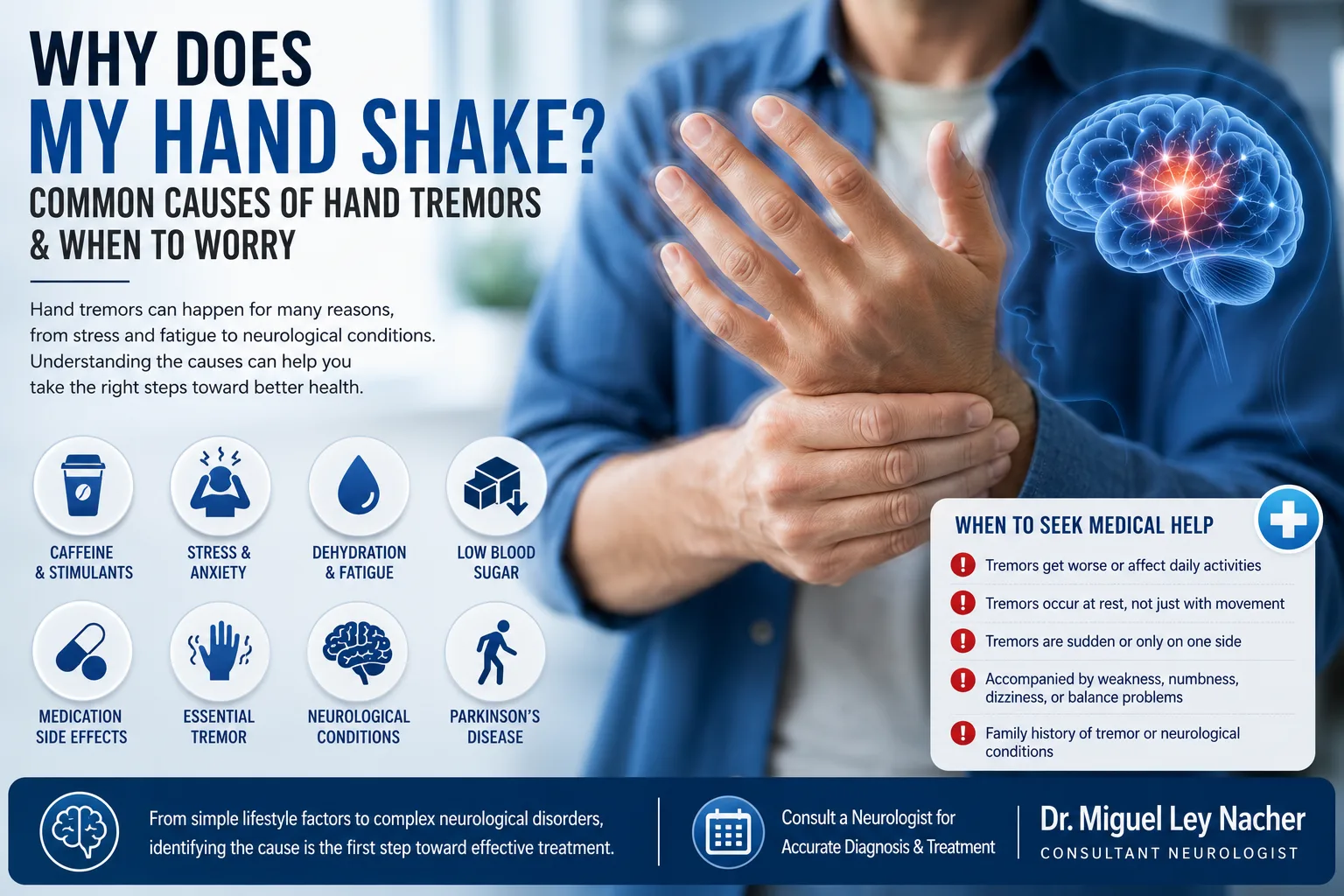
Have you ever noticed your hand shaking while holding a cup of coffee, writing a note, or even using your phone? If so, you’re not alone. Many people experience hand tremors at some point in their lives and immediately wonder, “Why does my hand shake?” While occasional shaking may not always indicate a serious problem, persistent or worsening tremors deserve attention.
The answer to why my hand shakes can vary significantly from person to person. Sometimes it may be related to stress or fatigue, while in other cases it could point to an underlying medical condition. Understanding the different causes of hand tremors can help you determine whether your symptoms are temporary or require professional evaluation.
Understanding Hand Tremors
Persistent tremors may sometimes be associated with common neurological disorders that affect movement and muscle control.
A tremor is an involuntary movement that causes a part of the body to shake rhythmically. Although tremors can affect different areas of the body, they most commonly occur in the hands. There are numerous causes of shaky hands, and identifying the underlying reason is the first step toward finding relief.
Many people search for answers about the causes of hand shaking when they notice symptoms interfering with daily activities. Tremors may appear occasionally or become more noticeable over time. The severity can range from a mild inconvenience to a condition that affects work, hobbies, and overall quality of life.
Knowing when to see a neurologist can help ensure early diagnosis and appropriate treatment for persistent hand tremors.
Common Hand Tremors Causes
One of the most common causes of hand tremors is simple physical exhaustion. When the body doesn’t get enough rest, it can struggle to function at its best. Long working hours, intense physical activity, lack of sleep, or ongoing fatigue may lead to temporary shaking in the hands. In many cases, these tremors improve once the body has had enough time to recover and recharge.
Another factor linked to shaky hands is excessive caffeine consumption. While a morning cup of coffee is usually harmless for most people, consuming large amounts of caffeine through coffee, energy drinks, pre-workout supplements, or certain medications can overstimulate the nervous system. As a result, some individuals may notice their hands shaking more than usual.
Low blood sugar is also one of the frequently reported causes of hand shaking. When the body doesn’t have enough glucose for energy, it can react with symptoms such as dizziness, sweating, weakness, and trembling hands. This is especially common if meals are skipped or delayed. In many situations, eating a nutritious and balanced meal can help stabilize blood sugar levels and reduce shaking.
Certain medications can be responsible for hand tremors as well. Some asthma medications, antidepressants, and other prescription drugs may list tremors as a side effect.
Anxiety Hand Shaking: A Common Trigger
One common reason people experience trembling hands is stress and anxiety. Anxiety and hand shaking can happen when the body reacts to pressure, fear, or nervousness. In these moments, the body’s natural fight-or-flight response kicks in, releasing adrenaline into the bloodstream. This can lead to symptoms such as a racing heart, sweaty palms, and noticeable shaking in the hands.
Many people who wonder “why does my hand shake” don’t immediately realize that emotional stress may be playing a role. Everyday situations like speaking in front of a crowd, attending a job interview, taking an important exam, or dealing with personal challenges can trigger anxiety, hand shaking, even in people who are otherwise healthy.
Although occasional anxiety and hand shaking are usually temporary and not a cause for concern, ongoing stress and anxiety can make the problem occur more often. If you frequently find yourself asking, “Why does my hand shake?”, it may be worth looking at your stress levels and daily habits. Practicing relaxation techniques, getting enough sleep, staying physically active, and seeking professional support when needed can help manage anxiety and hand shaking and improve overall well-being.
Essential Tremor Symptoms You Should Know
Among the most common neurological movement disorders is essential tremor. The condition is often hereditary and typically affects the hands during movement.
Some of the most recognizable essential tremor symptoms include shaking while writing, holding objects, eating, or performing fine motor tasks. Unlike some other tremor disorders, symptoms are usually most noticeable during activity rather than at rest.
Many people initially dismiss essential tremor symptoms as normal aging or stress. However, the condition can gradually progress over time. Understanding essential tremor symptoms can help individuals seek early diagnosis and appropriate care.
In some cases, essential tremor symptoms may also affect the head, voice, or other parts of the body. While not usually life-threatening, they can significantly impact daily functioning.
Hand Tremors Neurological Causes
There are several important hand tremors, neurological causes that should not be ignored. Neurological disorders affect the brain, spinal cord, or nerves, potentially leading to abnormal muscle movements.
One of the most recognized neurological causes of hand tremors is Parkinson’s disease. Other neurological conditions, including multiple sclerosis, stroke, and certain nerve disorders, may also contribute to tremors.
Because hand tremors neurological causes can sometimes involve progressive conditions, early medical evaluation is essential when symptoms persist or worsen. Identifying hand tremors’ neurological causes early may improve long-term management and outcomes.
Parkinson's Hand Tremor: What Makes It Different?
When discussing tremors, many people immediately think about Parkinson’s hand tremor. Although not every tremor is related to Parkinson’s disease, understanding the distinction is important.
A classic Parkinson’s hand tremor often occurs when the hand is at rest and may improve during movement. This differs from essential tremor, which usually becomes more noticeable during activity.
Although Parkinson’s disease and stroke are different conditions, recognizing the warning signs of a mini stroke is equally important when sudden neurological symptoms appear.
Other symptoms may accompany Parkinson’s hand tremor, including muscle stiffness, slower movement, balance problems, and changes in posture. If a person develops a Parkinson’s hand tremor along with these symptoms, medical evaluation should not be delayed.
Sudden Hand Tremors: Should You Be Concerned?
Experiencing sudden hand tremors can be alarming. While not always serious, abrupt shaking may sometimes indicate an underlying issue that requires attention.
Common causes of sudden hand tremors include low blood sugar, medication reactions, excessive caffeine, emotional stress, and dehydration. In some cases, sudden hand tremors may signal a neurological event or other medical condition.
If sudden hand tremors occur alongside dizziness or balance problems, understanding the possible causes of sudden dizziness can help identify serious neurological conditions.
If sudden hand tremors occur repeatedly and are accompanied by weakness, numbness, or speech difficulties, immediate medical assessment is recommended.
When Are Hand Tremors Serious?
Many people wonder when hand tremors are serious and when they should seek professional help. Occasional shaking after consuming too much caffeine or experiencing stress is usually not a cause for concern.
Another sign that may indicate when hand tremors are serious is the sudden onset of tremors without an obvious explanation. A healthcare provider can determine whether additional testing is necessary.
Expert Diagnosis & Advanced Treatment for Trembling Hands with Dr. Miguel
The most effective treatment for trembling hands depends on the underlying cause. Temporary tremors related to stress, fatigue, or caffeine often improve with lifestyle adjustments.
For conditions such as essential tremor, healthcare providers may recommend medications as part of a personalized trembling hands treatment plan. Physical therapy and occupational therapy may also help improve hand control.
When neurological conditions are responsible, specialized care may be necessary. The right trembling hands treatment can significantly improve daily functioning and quality of life.
If you’re repeatedly asking yourself, “Why does my hand shake?”, don’t ignore persistent symptoms. Understanding the various causes of hand shaking, recognizing warning signs, and seeking appropriate treatment for trembling hands can help you protect your health and regain confidence in your daily activities.
Dr. Miguel Ley Nacher provides personalized treatment plans that may include medication management, lifestyle modifications, advanced neurological evaluations, and minimally invasive procedures tailored to each patient’s unique needs.
Persistent tremors may also occur with other neurological symptoms, including headaches that should never be ignored, making early neurological evaluation essential.
FAQs - Frequently Asked Questions
Q1. Why do my hands shake even when I’m not nervous?
Ans – Hand tremors can occur due to fatigue, caffeine, low blood sugar, medication side effects, essential tremor, or neurological conditions. If the shaking is frequent or worsening, consult a neurologist for an accurate diagnosis.
Q2. Can dehydration cause shaky hands?
Ans – Yes. Dehydration can reduce blood flow and disrupt electrolyte balance, leading to shaky hands, dizziness, and weakness. Staying hydrated often improves mild dehydration-related tremors.
Q3. Are hand tremors always neurological?
Ans – No. Hand tremors may be caused by stress, anxiety, fatigue, caffeine, medications, or neurological disorders. Persistent tremors should be medically evaluated to identify the underlying cause.
Q4. What deficiency causes hand tremors?
Ans – Low levels of Vitamin B12, magnesium, or other essential nutrients may contribute to hand tremors. A medical evaluation and blood tests can help determine if a deficiency is responsible.
Q5. Can hand tremors go away on their own?
Ans – Yes. Tremors caused by temporary factors like stress, fatigue, dehydration, or caffeine often improve once the trigger is resolved. Persistent tremors should be assessed by a healthcare professional.
Q6. Why does only one hand shake sometimes?
Ans – A tremor affecting one hand may result from nerve problems, injury, essential tremor, or Parkinson’s disease. If it develops suddenly or worsens over time, seek medical advice.
Q7. Do hand tremors get worse with age?
Ans – Some conditions, such as essential tremor and Parkinson’s disease, may become more noticeable with age. Early diagnosis and treatment can help manage symptoms effectively.
Q8. Can anxiety cause trembling hands daily?
Ans – Yes. Ongoing stress and anxiety can trigger daily hand tremors by activating the body’s stress response. Managing anxiety often helps reduce the frequency of shaking.
Q9. Should I see a neurologist for hand tremors?
Ans – You should see a neurologist if your hand tremors are persistent, worsening, or occur with symptoms such as weakness, numbness, or balance problems. Early evaluation helps identify the underlying cause.
Related Services
Recent Blogs
Book An Appointment
About the author

Dr. Miguel Ley Nacher, MD, MSc, PhD
Consultant Neurologist & Epilepsy Specialist
MD, MSc, PhD
Consultant Neurologist
Specialist in Epilepsy & Neurophysiology
17+ Years of Experience
Al Zahra Hospital Dubai
Dr. Miguel Ley Nacher is an internationally trained Consultant Neurologist and clinical psychologist with extensive expertise in epilepsy, stroke management, movement disorders, and advanced neurophysiology. With over 17 years of experience, he is recognized for delivering evidence-based neurological care focused on accurate diagnosis, advanced treatment techniques, and long-term patient wellbeing.
He completed his medical education and specialized neurology training in Spain, followed by advanced epilepsy fellowship training in the United States at Rush University Medical Center, Chicago. Dr. Miguel also holds a Master of Science (MSc) degree and a PhD in Biomedicine, reflecting his strong academic and research background in neurological sciences.
Dr. Miguel specializes in epilepsy management, long-term video EEG monitoring (VEEG), stroke care, headaches and migraines, Parkinson’s disease, multiple sclerosis, dementia, peripheral neuropathies, and neuromodulation therapies. His approach combines advanced neurological expertise with compassionate, patient-centered care tailored to each individual’s condition and treatment goals.
He is an active member of leading international neurological organizations, including the American Academy of Neurology (AAN), American Epilepsy Society (AES), European Academy of Neurology (EAN), and the International League Against Epilepsy (ILAE).
Medical Disclaimer
This article is intended for informational and educational purposes only and should not be considered medical advice, diagnosis, or treatment. Always consult a qualified healthcare professional regarding any neurological symptoms or medical concerns before making healthcare decisions. Medically reviewed by Dr. Miguel Ley Nacher, Consultant Neurologist & Epilepsy Specialist.