
When Should Headaches Be Taken Seriously? Warning Signs You Should Never Ignore
- Medically Reviewed By Dr. Miguel Ley Nacher - MD, MSD, PhD | Consultant Neurologist
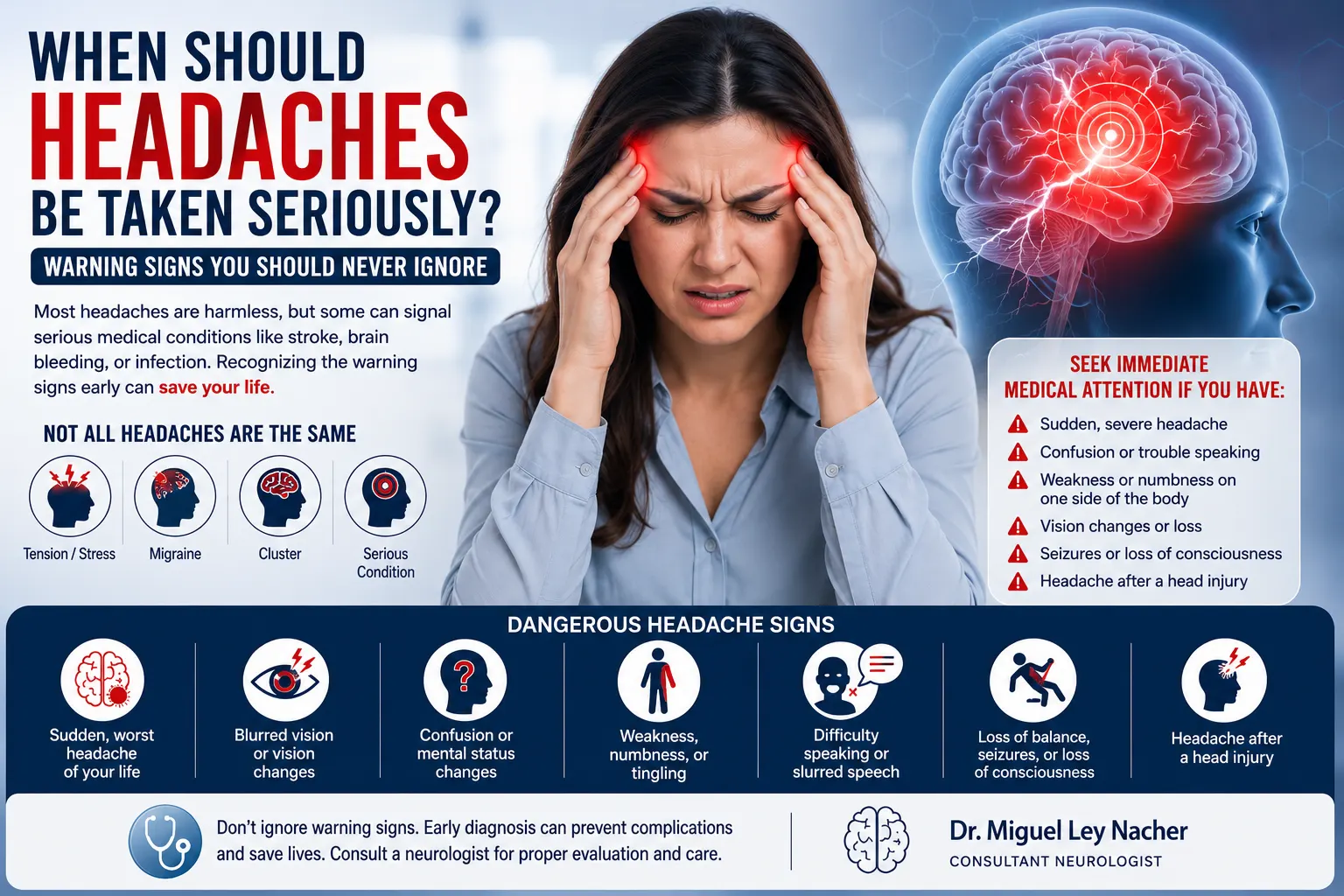
Headaches are one of the most common health complaints worldwide. Most people experience them occasionally due to stress, dehydration, lack of sleep, or eye strain. In many cases, headaches are temporary and improve with rest or over-the-counter medication. However, there are situations where a headache may signal a more serious underlying condition. This often leaves people wondering, When should headaches be taken seriously?
Knowing the difference between a routine headache and one that requires immediate medical attention can be crucial. Understanding dangerous headache signs and recognizing serious headache symptoms may help prevent complications and ensure timely treatment.
Some headaches may be associated with underlying common neurological disorders that require specialist evaluation and treatment.
Not Every Headache Is the Same
Most headaches are caused by common issues such as stress, dehydration, lack of sleep, or tension and usually improve with rest or simple remedies. However, not every headache should be brushed aside. In some cases, headaches can be linked to more serious conditions, including neurological disorders, infections, bleeding in the brain, or problems affecting the blood vessels. This is why understanding when headaches should be taken seriously is so important. Recognizing the difference between a routine headache and one that requires medical attention can help prevent potential complications.
Many people wonder when a headache is serious enough to seek professional care. There isn’t a single answer, as several factors need to be considered. The intensity of the pain, how often the headaches occur, how long they last, and whether other symptoms are present can all provide important clues. Being aware of key headache warning signs, such as sudden severe pain, vision changes, confusion, weakness, or difficulty speaking, can help you identify situations where medical evaluation may be necessary.
Dangerous Headache Signs You Should Never Ignore
Certain symptoms should immediately raise concern. Among the most important dangerous headache signs is a headache that appears suddenly and reaches maximum intensity within seconds or minutes. Many people describe this as the worst headache of their lives.
Other dangerous headache signs include confusion, loss of consciousness, difficulty speaking, seizures, or significant changes in vision. These symptoms may indicate a serious medical condition that requires urgent attention.
Persistent headaches that continue worsening over time can also be among the most concerning headache warning signs. A gradual increase in severity without an obvious explanation should never be ignored.
Recognizing these dangerous headache signs early can make a significant difference in diagnosis and treatment outcomes.
Serious Headache Symptoms That Require Attention
There are several serious headache symptoms that warrant medical evaluation. A headache accompanied by fever, stiff neck, sensitivity to light, or persistent vomiting may suggest an infection affecting the nervous system.
Another group of serious headache symptoms involves changes in mental status. Difficulty concentrating, confusion, memory problems, or unusual behaviour can indicate an underlying neurological issue.
People experiencing repeated episodes of severe pain should also be aware of serious headache symptoms that differ from their typical headache pattern. A sudden change in headache characteristics may require further investigation.
Understanding serious headache symptoms helps ensure that potentially dangerous conditions are identified before they become life-threatening.
Headache Emergency Symptoms You Should Act On Immediately
Some headaches should be treated as medical emergencies. Common headache emergency symptoms include sudden weakness on one side of the body, facial drooping, slurred speech, or loss of coordination.
In certain situations, headache emergency symptoms may be associated with bleeding in the brain, stroke, or severe infections. Delaying treatment can significantly increase the risk of permanent complications.
A headache following a head injury should also be considered carefully. If headache emergency symptoms such as dizziness, confusion, or loss of consciousness develop after trauma, immediate medical attention is necessary.
Being familiar with headache emergency symptoms can help individuals seek urgent care when every minute matters.
Stroke Headache Symptoms: What to Watch For
One particularly important condition associated with severe headaches is stroke. While not every stroke causes headache, certain types may present with significant pain.
Common stroke headache symptoms may include sudden onset headache combined with weakness, numbness, vision changes, difficulty speaking, or balance problems. These symptoms often appear unexpectedly and require emergency evaluation.
You should also understand whether numbness is a sign of stroke, as it frequently occurs alongside serious neurological emergencies.
Because stroke headache symptoms can vary from person to person, it is important not to ignore any unusual neurological changes. Quick treatment can significantly improve recovery outcomes.
Recognizing early mini stroke symptoms can help patients receive treatment before a major stroke occurs.
Recognizing stroke headache symptoms early and seeking immediate medical care can be lifesaving.
Migraine vs Dangerous Headache: Understanding the Difference
Many individuals struggle to distinguish between a routine migraine and a potentially serious condition. Understanding migraine vs dangerous headache characteristics can help reduce uncertainty.
Migraines often involve throbbing pain, nausea, sensitivity to light, and visual disturbances. These symptoms may be intense but often follow a familiar pattern for the individual.
When comparing migraine vs dangerous headache, a key difference is the sudden appearance of new or unusual symptoms. If a headache feels significantly different from previous migraines, medical evaluation may be necessary.
Another important consideration in the discussion of migraine vs dangerous headache is the presence of neurological symptoms such as weakness, speech difficulties, or confusion. These symptoms should never be assumed to be part of a typical migraine without professional assessment.
Sudden Severe Headache Causes
Being aware of sudden severe headache causes can help you understand why some headaches require urgent medical attention. One of the most concerning types is a thunderclap headache, which comes on suddenly and reaches its peak intensity within seconds or minutes. Many people describe it as the worst headache they have ever experienced, making it very different from a typical tension headache or migraine.
Several serious medical conditions can be among the causes of sudden, severe headaches. These may include bleeding around the brain, a ruptured blood vessel, dangerously high blood pressure, or certain neurological disorders. Although these conditions are not common, they can be life-threatening and should never be ignored.
Knowing when to see a neurologist can help ensure early diagnosis and improve treatment outcomes.
If a severe headache appears suddenly without warning, especially when accompanied by symptoms such as confusion, vision changes, weakness, or difficulty speaking, immediate medical evaluation is strongly recommended.
Other sudden severe headache causes may involve infections, vascular disorders, or complications related to medications. Because the underlying reason cannot always be determined without medical testing, prompt evaluation is important.
Whenever someone experiences one of the known sudden severe headache causes, emergency medical care should be considered.
Headache with Neurological Symptoms
One of the clearest indicators that a headache requires urgent attention is the presence of a headache with neurological symptoms. These symptoms may include weakness, numbness, vision changes, speech difficulties, balance problems, or confusion.
A headache with neurological symptoms can sometimes indicate a stroke, brain tumor, infection, or other serious neurological disorder. While not every case is life-threatening, these symptoms should never be ignored.
People experiencing a headache with neurological symptoms should seek prompt medical evaluation, especially if the symptoms are new or worsening. Early diagnosis can improve treatment outcomes and reduce the risk of complications.
When to See a Doctor for a Headache
Many people wonder when to see a doctor for a headache rather than managing symptoms at home. If headaches become more frequent, more severe, or interfere with daily activities, medical evaluation is recommended.
Persistent headaches accompanied by dizziness may indicate more serious conditions, so it’s important to understand the possible causes of sudden dizziness
Another reason to see a doctor for a headache becomes important when over-the-counter medications stop providing relief. Chronic or recurring headaches may require a more comprehensive assessment.
You should also consider when to see a doctor for a headache if symptoms are accompanied by fever, vision changes, weakness, numbness, or any other concerning neurological signs.
Ultimately, understanding when to see a doctor for a headache can help prevent delays in diagnosis and ensure appropriate treatment.
Expert Diagnosis & Advanced Treatment with Dr. Miguel
Headaches are common, but they should never be automatically dismissed. Recognizing headache warning signs, understanding when a headache is serious, and identifying dangerous headache signs can help protect your health.
If you experience serious headache symptoms, stroke headache symptoms, a headache with neurological symptoms, or any of the known headache emergency symptoms, seek medical attention immediately. Knowing when headaches should be taken seriously may be the key to identifying a potentially life-threatening condition before it becomes more severe.
If you are experiencing frequent or severe headaches, it is important to consult a neurologist. Dr. Miguel Leynacher can help identify the underlying cause and recommend the most appropriate headache or migraine treatment tailored to your needs.
FAQs - Frequently Asked Questions
Q1. How do I know if my headache is an emergency?
Ans – A headache should be treated as an emergency if it starts suddenly, is extremely severe, or occurs with symptoms such as confusion, weakness, numbness, vision changes, or difficulty speaking.
Q2. What type of headache is linked to stroke?
Ans – A stroke-related headache is often sudden and severe and may occur with facial drooping, weakness, numbness, slurred speech, or loss of balance. These symptoms require immediate medical attention.
Q3. Can high blood pressure cause dangerous headaches?
Ans – Yes. Severely elevated blood pressure can cause intense headaches and may signal a medical emergency, especially if accompanied by chest pain, vision changes, or neurological symptoms.
Q4. Is a sudden, severe headache always serious?
Ans – Not always, but a sudden, intense headache should never be ignored. It can sometimes indicate bleeding around the brain, stroke, or another serious neurological condition.
Q5. Should I worry about headaches with blurred vision?
Ans – Yes. A headache accompanied by blurred vision may indicate migraine, high blood pressure, or a neurological condition. Medical evaluation is recommended, especially if symptoms appear suddenly.
Q6. Can dehydration cause severe headaches?
Ans – Yes. Dehydration is a common cause of headaches and may also lead to dizziness and fatigue. Drinking fluids often helps, but persistent or severe headaches should be medically assessed.
Q7. What does a brain aneurysm headache feel like?
Ans – A brain aneurysm headache is often described as the worst headache of a person’s life. It usually starts suddenly and may be accompanied by nausea, neck stiffness, or loss of consciousness.
Q8. Are headaches with nausea always migraines?
Ans – No. Although migraines commonly cause nausea, headaches with nausea can also result from infections, high blood pressure, or other neurological conditions. Persistent symptoms should be evaluated.
Q9. When should recurring headaches be medically evaluated?
Ans – Recurring headaches should be evaluated if they become more frequent, more severe, interfere with daily life, or are accompanied by neurological symptoms such as weakness, numbness, or vision changes.
Related Services
Recent Blogs
Book An Appointment
About the author

Dr. Miguel Ley Nacher, MD, MSc, PhD
Consultant Neurologist & Epilepsy Specialist
MD, MSc, PhD
Consultant Neurologist
Specialist in Epilepsy & Neurophysiology
17+ Years of Experience
Al Zahra Hospital Dubai
Dr. Miguel Ley Nacher is an internationally trained Consultant Neurologist and clinical psychologist with extensive expertise in epilepsy, stroke management, movement disorders, and advanced neurophysiology. With over 17 years of experience, he is recognized for delivering evidence-based neurological care focused on accurate diagnosis, advanced treatment techniques, and long-term patient wellbeing.
He completed his medical education and specialized neurology training in Spain, followed by advanced epilepsy fellowship training in the United States at Rush University Medical Center, Chicago. Dr. Miguel also holds a Master of Science (MSc) degree and a PhD in Biomedicine, reflecting his strong academic and research background in neurological sciences.
Dr. Miguel specializes in epilepsy management, long-term video EEG monitoring (VEEG), stroke care, headaches and migraines, Parkinson’s disease, multiple sclerosis, dementia, peripheral neuropathies, and neuromodulation therapies. His approach combines advanced neurological expertise with compassionate, patient-centered care tailored to each individual’s condition and treatment goals.
He is an active member of leading international neurological organizations, including the American Academy of Neurology (AAN), American Epilepsy Society (AES), European Academy of Neurology (EAN), and the International League Against Epilepsy (ILAE).
Medical Disclaimer
This article is intended for informational and educational purposes only and should not be considered medical advice, diagnosis, or treatment. Always consult a qualified healthcare professional regarding any neurological symptoms or medical concerns before making healthcare decisions. Medically reviewed by Dr. Miguel Ley Nacher, Consultant Neurologist & Epilepsy Specialist.