
Why Does My Face Feel Numb? Common Causes of Facial Numbness and When to Seek Medical Advice
- Medically Reviewed By Dr. Miguel Ley Nacher - MD, MSD, PhD | Consultant Neurologist
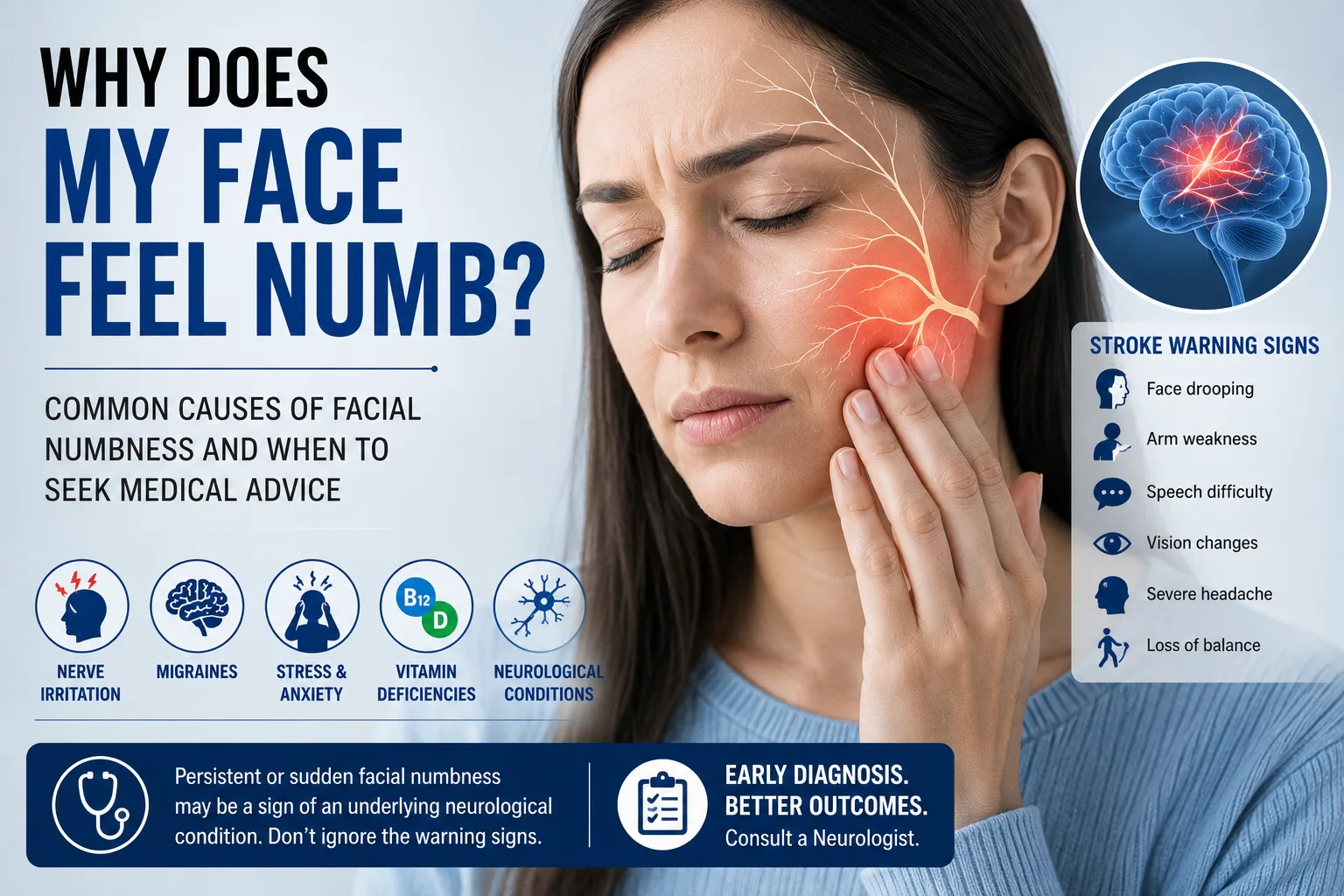
Have you ever touched your face and suddenly noticed that one area feels different?
Maybe your cheek feels less sensitive, your lips are tingling, or one side of your face feels asleep. This unusual sensation can be unsettling, and the first question that often comes to mind is: why does my face feel numb?
Facial numbness is a symptom that many people experience at some point in their lives. Sometimes, it may happen because of something temporary, such as stress, pressure on a nerve, or a migraine. In other cases, it can be linked to conditions affecting the nerves or the brain that require a detailed neurological evaluation.
Understanding the possible face numbness causes can help you know when the symptom is harmless and when it may be a sign that you should seek medical attention.
Facial numbness may sometimes be associated with common neurological disorders that affect the brain, nerves, or spinal cord.
What Does Facial Numbness Feel Like?
Numbness in face does not always feel the same for everyone. Some people describe it as a loss of feeling, while others notice:
- A tingling or “pins and needles” sensation.
- A burning or crawling feeling on the skin.
- Reduced ability to feel touch, temperature, or pressure.
- A heavy or strange sensation on one side of the face.
The face has a highly complex nerve network that connects with the brain. Any problem affecting these nerves, their pathways, or the areas of the brain responsible for sensation can potentially cause facial numbness.
Why Does My Face Feel Numb? Understanding the Possible Causes
Facial numbness can happen for many different reasons. The cause often depends on how the numbness starts, where it appears, and whether it comes with other symptoms.
Some common causes of face numbness include:
- Nerve Irritation or Compression
- Migraines
- Anxiety and Stress
- Vitamin Deficiencies
- Neurological Conditions
Face Tingling Causes: Why Does My Face Feel Like It Is Tingling?
Many patients describe facial numbness as a tingling sensation rather than complete loss of feeling. The face tingling causes can include temporary nerve irritation, migraines, anxiety, or neurological conditions.
One important point is that the pattern of tingling matters. Occasional tingling that disappears quickly may have a simple explanation, but repeated episodes, worsening symptoms, or tingling combined with weakness should always be evaluated.
Facial Numbness Stroke: When Could It Be a Warning Sign?
Recognizing mini stroke symptoms early can help reduce the risk of permanent brain damage and improve treatment outcomes.
Facial numbness stroke symptoms usually appear suddenly and often affect one side of the face. Stroke-related facial numbness may occur alongside other warning signs, such as:
- Drooping of one side of the face.
- Weakness or numbness in an arm or leg.
- Difficulty speaking or understanding speech.
- Sudden vision problems.
- Loss of balance or severe dizziness.
- A sudden, unusual headache.
If facial numbness develops suddenly, especially with any of these symptoms, emergency medical care should be sought immediately.
One-Sided Face Numbness: Should You Be Concerned?
Many patients also wonder whether numbness is a sign of stroke, particularly when symptoms affect only one side of the body.
One sided face numbness is a symptom that deserves attention because it may indicate that a specific nerve pathway or area of the brain is affected.
Although stroke is an important cause to consider, it is not the only explanation. Other possible causes include:
- Trigeminal nerve disorders.
- Bell’s palsy.
- Migraine-related sensory changes.
- Nerve inflammation.
- Other neurological conditions.
A neurological examination helps determine whether the symptom is related to the facial nerves, the brain, or another underlying issue.
Facial Numbness Neurological Causes
Understanding when to see a neurologist can help ensure prompt diagnosis and treatment of persistent facial numbness.
Because facial sensation depends on complex communication between nerves and the brain, several neurological conditions may cause numbness.
Some facial numbness neurological causes include:
- Multiple Sclerosis
- Stroke or Transient Ischemic Attack (TIA)
- Trigeminal Nerve Disorders
Facial Numbness Treatment: How Can It Be Managed?
The right facial numbness treatment depends on identifying the underlying cause. Treating the symptom alone is not enough; the goal is to understand why it is happening.
Treatment may include:
- Managing migraines with appropriate medications.
- Correcting vitamin deficiencies.
- Treating nerve inflammation or infections.
- Using specialized therapies for neurological conditions.
- Monitoring and managing conditions affecting the brain and nervous system.
A neurologist may recommend tests such as MRI scans, blood tests, or nerve studies to reach an accurate diagnosis.
When Is Face Numbness Serious?
Many people wonder: when is face numbness serious?
You should seek urgent medical advice if numbness:
- Appears suddenly.
- Affects only one side of the face.
- Is accompanied by weakness, confusion, or speech difficulties.
- Happens with vision changes or severe dizziness.
- Does not improve or keeps returning.
Even when symptoms improve, unexplained facial numbness should not always be ignored, as it may provide an important clue about an underlying neurological condition.
Get Expert Neurological Care for Facial Numbness in Dubai
Feeling numbness in your face can be frightening, especially when you are unsure what is causing it. Dr. Miguel Ley Nacher helps patients understand their symptoms, find the underlying cause, and receive the right care.
With Dr. Miguel, you can expect:
- A careful evaluation: Taking the time to understand when your symptoms started and how they affect you.
- Expert neurological assessment: Identifying possible causes, from nerve problems to neurological conditions.
- Personalized treatment plans: Creating an approach that fits your condition and health needs.
- Support you can trust: Clear explanations and guidance throughout your diagnosis and treatment.
If facial numbness keeps returning or does not have an obvious cause, consulting a neurologist can help you get clarity and peace of mind.
If facial numbness occurs together with serious headaches, speech difficulties, or weakness, immediate neurological assessment is recommended.
FAQs - Frequently Asked Questions
Q1. Can anxiety cause facial numbness?
Ans – Yes, it can. When you’re feeling anxious or stressed, your body can react in ways you may not expect, including causing tingling or numbness in your face. This usually improves as your anxiety settles, but ongoing or repeated facial numbness should always be checked to make sure there is no other cause.
Q2. Can facial numbness go away on its own?
Ans – Sometimes, facial numbness may resolve on its own if it is caused by temporary factors such as anxiety or minor nerve irritation. Persistent or recurring numbness requires evaluation.
Q3. How long does facial numbness usually last?
Ans – It depends on the cause. Some episodes last only a few minutes, while others may continue for hours or longer.
Q4. Can a pinched nerve cause facial numbness?
Ans – Yes. Nerve irritation or compression can sometimes affect sensation and cause numbness or tingling in parts of the face.
Q5. What vitamin deficiency causes facial numbness?
Ans – Vitamin B12 deficiency is one of the most common nutritional deficiencies associated with nerve-related symptoms such as numbness and tingling.
Q6. Is numbness in the face always a stroke?
Ans – No. Many conditions can cause facial numbness, including migraines, anxiety, and nerve problems. However, sudden facial numbness can be a warning sign of stroke.
Q7. Can migraines cause facial numbness?
Ans – Yes. Some migraines can cause sensory symptoms, including facial tingling or numbness.
Q8. What tests are done for facial numbness?
Ans – A neurologist may perform a clinical examination and recommend tests such as MRI, blood tests, or nerve conduction studies, depending on the suspected cause.
Q9. Should I go to the ER for sudden facial numbness?
Ans – Yes. Sudden facial numbness, especially when combined with facial drooping, weakness, speech problems, or vision changes, requires urgent medical attention.
Related Services
Recent Blogs
Book An Appointment
About the author

Dr. Miguel Ley Nacher, MD, MSc, PhD
Consultant Neurologist & Epilepsy Specialist
MD, MSc, PhD
Consultant Neurologist
Specialist in Epilepsy & Neurophysiology
17+ Years of Experience
Al Zahra Hospital Dubai
Dr. Miguel Ley Nacher is an internationally trained Consultant Neurologist and clinical psychologist with extensive expertise in epilepsy, stroke management, movement disorders, and advanced neurophysiology. With over 17 years of experience, he is recognized for delivering evidence-based neurological care focused on accurate diagnosis, advanced treatment techniques, and long-term patient wellbeing.
He completed his medical education and specialized neurology training in Spain, followed by advanced epilepsy fellowship training in the United States at Rush University Medical Center, Chicago. Dr. Miguel also holds a Master of Science (MSc) degree and a PhD in Biomedicine, reflecting his strong academic and research background in neurological sciences.
Dr. Miguel specializes in epilepsy management, long-term video EEG monitoring (VEEG), stroke care, headaches and migraines, Parkinson’s disease, multiple sclerosis, dementia, peripheral neuropathies, and neuromodulation therapies. His approach combines advanced neurological expertise with compassionate, patient-centered care tailored to each individual’s condition and treatment goals.
He is an active member of leading international neurological organizations, including the American Academy of Neurology (AAN), American Epilepsy Society (AES), European Academy of Neurology (EAN), and the International League Against Epilepsy (ILAE).
Medical Disclaimer
This article is intended for informational and educational purposes only and should not be considered medical advice, diagnosis, or treatment. Always consult a qualified healthcare professional regarding any neurological symptoms or medical concerns before making healthcare decisions. Medically reviewed by Dr. Miguel Ley Nacher, Consultant Neurologist & Epilepsy Specialist.