
Memory Loss or Forgetfulness: When Is It a Sign of a Neurological Disorder?
- Medically Reviewed By Dr. Miguel Ley Nacher - MD, MSD, PhD | Consultant Neurologist
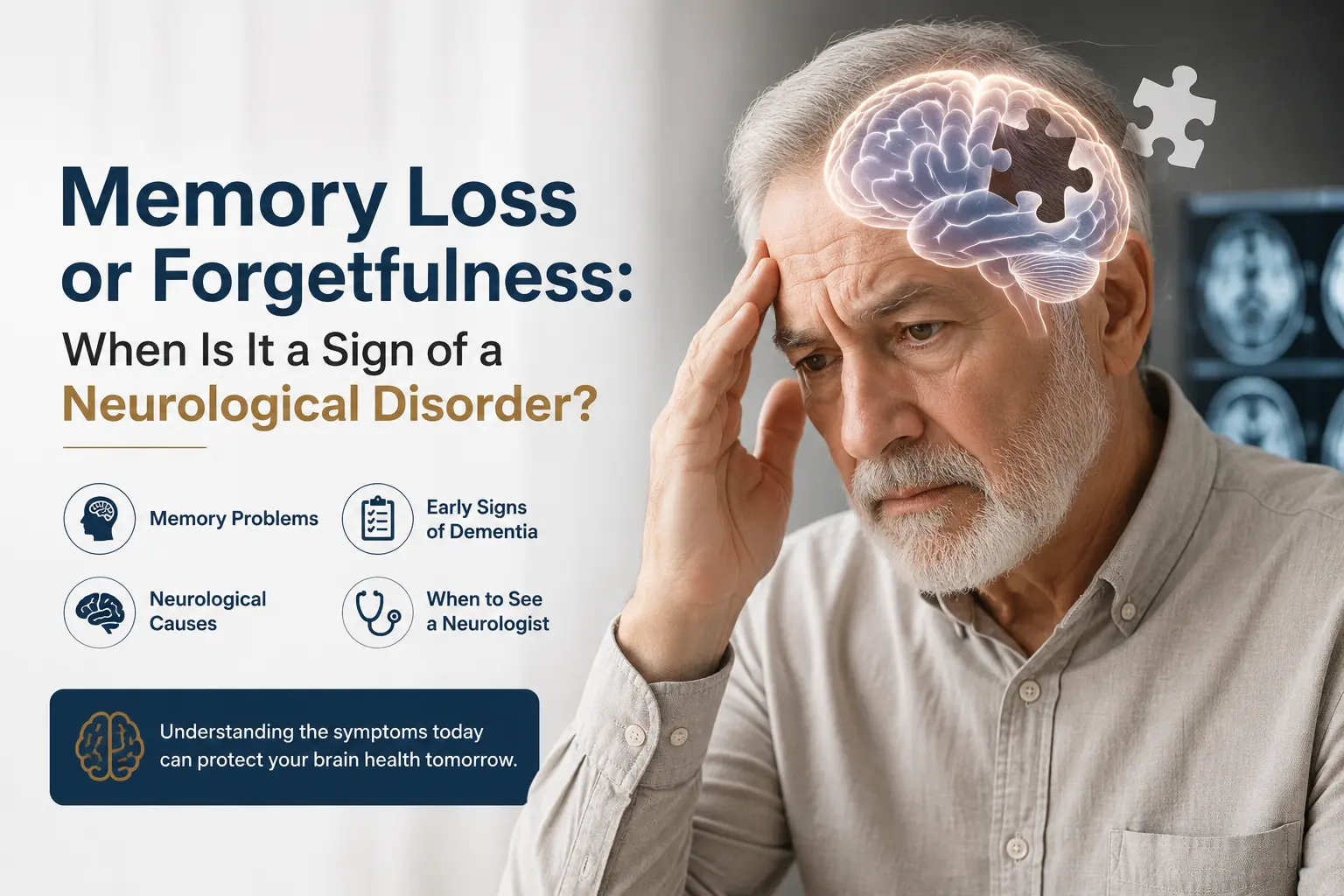
Have you ever walked into a room and suddenly forgotten what you needed? Or spent a few minutes searching for your glasses, only to discover they were right in front of you? These moments happen to almost everyone and are usually nothing more than a sign of a busy mind or a stressful day.
Knowing the difference between normal forgetfulness and concerning memory problems can help you take the right step toward protecting your brain health.
Memory problems can sometimes be associated with common neurological disorders affecting the brain and nervous system.
What Causes Memory Loss or Forgetfulness?
There is no single reason behind memory difficulties. In fact, many forgetfulness causes are temporary and can improve once the underlying issue is treated.
Daily factors that can affect your ability to focus and remember include:
- Stress and anxiety
- Poor sleep
- Vitamin B12 deficiency
- Certain medications
- Thyroid disorders
- Head injuries
- Alcohol misuse
Some people experience short-term memory loss, where they struggle to remember recent conversations, appointments, or information they have just learned. While stress, fatigue, and lifestyle factors can sometimes cause these symptoms, ongoing or worsening memory difficulties should always be assessed.
Normal Forgetfulness vs Memory Loss
Normal forgetfulness may include:
- Forgetting where you placed your keys but remembering later.
- Taking a moment to recall someone’s name.
- Missing an appointment occasionally.
- Losing focus during a busy day.
However, memory changes become more concerning when they happen repeatedly or begin interfering with your independence. Warning signs include:
- Repeating the same questions even after receiving an answer.
- Forgetting recent conversations, appointments, or important events.
- Becoming confused in familiar places.
- Finding it difficult to complete tasks that were previously easy.
Neurological Disorders That Cause Memory Problems
Recognizing mini stroke symptoms early is important, as temporary interruptions in blood flow to the brain can sometimes affect memory and cognitive function.
Several brain disorders causing memory loss can affect the way the brain stores, processes, and retrieves information. Memory loss neurological causes include:
- Dementia
- Alzheimer’s Disease
- Stroke
- Multiple Sclerosis
- Epilepsy
- Brain Tumors
Early Signs of Dementia You Should Know
Recognizing the early signs of dementia can help patients seek medical advice sooner and receive the right support. Warning signs include:
- Frequently forgetting newly acquired knowledge.
- Asking the same questions or telling the same tales more than once.
- Having trouble locating well-known words in conversations.
- Having trouble organizing or planning everyday tasks.
- Making decisions that seem out of the ordinary or displaying shifts in judgment.
- Losing track of time, dates, or familiar locations.
- Seeing discernible shifts in behavior, attitude, or mood.
Can Stress and Anxiety Cause Memory Loss?
Yes. Stress and anxiety are among the common forgetfulness causes and can have a noticeable effect on concentration and memory.
When your brain is constantly dealing with stress, it may become harder to focus, absorb new information, and recall details later. Many people describe this as feeling mentally exhausted, distracted, or experiencing “brain fog.”
Depression can also affect memory because it may reduce concentration, motivation, and the ability to process information effectively.
When Is Forgetfulness a Warning Sign?
If memory problems occur alongside symptoms such as facial numbness, weakness, or speech difficulties, immediate neurological assessment is recommended.
Many people wonder: when is forgetfulness serious?
Occasional forgetfulness is usually not a concern. However, you should consider seeing a neurologist if you experience memory difficulties:
- Continue to get worse over time
- Affect your ability to work or manage daily responsibilities
- Make it difficult to handle finances or medications
- Cause confusion in places you know well
- Appear after a head injury or stroke
- Occur with symptoms such as weakness, speech difficulties, seizures, or personality changes
Sudden memory loss should always be taken seriously, especially when it happens with signs of a stroke, such as facial weakness, difficulty speaking, or weakness on one side of the body.
How Neurologists Diagnose Memory Disorders?
Understanding when to see a neurologist can help ensure early diagnosis and treatment of memory-related conditions.
The evaluation process may include:
- Reviewing your symptoms, medical history, and any changes you have noticed over time.
- Performing a neurological examination to assess brain and nervous system function.
- Using cognitive tests to evaluate memory, concentration, and thinking abilities.
- Blood tests to identify treatable causes such as vitamin deficiencies or thyroid disorders.
- MRI or CT scans when brain imaging is needed.
- EEG testing if there is a possibility of seizures affecting memory.
- Neuropsychological assessments for a more detailed understanding of cognitive function.
Treatment Options for Memory Loss
Treatment for memory loss or forgetfulness depends on the underlying cause. They may include:
- Managing the underlying neurological condition affecting memory.
- Cognitive rehabilitation to support memory skills and improve daily activities.
- Medications when needed to help manage symptoms.
- Improving sleep quality and establishing healthier sleep routines.
- Maintaining regular physical activity to support overall brain health.
When Should You See a Neurologist for Memory Problems?
You should consider consulting a neurologist if you notice:
- Increasing short-term memory loss.
- Memory difficulties that do not improve.
- Worsening memory loss symptoms.
- Difficulty completing familiar activities.
- Confusion or changes in personality.
- Memory changes after a stroke, seizure, or head injury.
Why Choose Dr. Miguel Ley Nacher for Memory Problems?
When memory changes affect your daily life, an accurate diagnosis is the first step toward proper care. Dr. Miguel Ley Nacher, Consultant Neurologist in Dubai, provides expert evaluation and personalized treatment plans to identify the cause of memory problems and support each patient’s neurological health.
Memory loss accompanied by serious headaches, confusion, or sudden neurological symptoms should never be ignored.
Why choose Dr. Miguel Ley Nacher?
- Expertise in diagnosing and managing memory-related neurological conditions.
- Personalized care based on each patient’s symptoms and needs.
- Experience with dementia, stroke, epilepsy, and multiple sclerosis.
- Patient-focused approach with clear guidance and support.
Don’t ignore changes in your memory. Book your consultation with Dr. Miguel Ley Nacher today for expert neurological care and the right approach to protecting your brain health.
FAQs - Frequently Asked Questions
Q1. Can memory loss be reversed?
Ans – In some cases, memory loss can improve, especially when it is caused by treatable factors such as stress, poor sleep, vitamin deficiencies, or certain medications. However, memory problems related to neurological conditions may require ongoing care and management to help maintain brain function and quality of life.
Q2. At what age should memory loss be a concern?
Ans – Memory changes can happen at any age, but they become a concern when they start affecting your daily activities, work, relationships, or ability to manage things independently. While occasional forgetfulness is a normal part of life, noticeable or worsening memory problems should not simply be considered a normal part of aging and may require medical evaluation.
Q3. Can lack of sleep cause memory problems?
Ans – Yes. Poor sleep can affect concentration, learning, and the brain’s ability to store new memories.
Q4. What vitamin deficiency causes memory loss?
Ans – Vitamin B12 deficiency is one of the common reversible causes of memory difficulties.
Q5. Can depression cause forgetfulness?
Ans – Yes. Depression can affect attention and concentration, which may appear as forgetfulness.
Q6. What is the difference between dementia and Alzheimer’s disease?
Ans – Dementia describes a decline in memory and thinking abilities, while Alzheimer’s disease is the most common condition that causes dementia.
Q7. Can memory loss be a sign of a brain tumor?
Ans – In rare cases, brain tumors affecting memory-related areas can cause memory changes, especially when accompanied by other neurological symptoms.
Q8. What tests are used to diagnose memory disorders?
Ans – Doctors may use cognitive tests, neurological examinations, blood tests, MRI or CT scans, EEG, and neuropsychological assessments.
Q9. How do I know if my memory loss is serious?
Ans – Memory loss may need medical evaluation if it worsens over time, affects daily activities, or occurs with confusion, speech problems, weakness, seizures, or personality changes.
Related Services
Recent Blogs
Book An Appointment
About the author

Dr. Miguel Ley Nacher, MD, MSc, PhD
Consultant Neurologist & Epilepsy Specialist
MD, MSc, PhD
Consultant Neurologist
Specialist in Epilepsy & Neurophysiology
17+ Years of Experience
Al Zahra Hospital Dubai
Dr. Miguel Ley Nacher is an internationally trained Consultant Neurologist and clinical psychologist with extensive expertise in epilepsy, stroke management, movement disorders, and advanced neurophysiology. With over 17 years of experience, he is recognized for delivering evidence-based neurological care focused on accurate diagnosis, advanced treatment techniques, and long-term patient wellbeing.
He completed his medical education and specialized neurology training in Spain, followed by advanced epilepsy fellowship training in the United States at Rush University Medical Center, Chicago. Dr. Miguel also holds a Master of Science (MSc) degree and a PhD in Biomedicine, reflecting his strong academic and research background in neurological sciences.
Dr. Miguel specializes in epilepsy management, long-term video EEG monitoring (VEEG), stroke care, headaches and migraines, Parkinson’s disease, multiple sclerosis, dementia, peripheral neuropathies, and neuromodulation therapies. His approach combines advanced neurological expertise with compassionate, patient-centered care tailored to each individual’s condition and treatment goals.
He is an active member of leading international neurological organizations, including the American Academy of Neurology (AAN), American Epilepsy Society (AES), European Academy of Neurology (EAN), and the International League Against Epilepsy (ILAE).
Medical Disclaimer
This article is intended for informational and educational purposes only and should not be considered medical advice, diagnosis, or treatment. Always consult a qualified healthcare professional regarding any neurological symptoms or medical concerns before making healthcare decisions. Medically reviewed by Dr. Miguel Ley Nacher, Consultant Neurologist & Epilepsy Specialist.