
Understanding When to See a Neurologist: Key Symptoms & Red Flags
- Medically Reviewed By Dr. Miguel Ley Nacher - MD, MSD, PhD | Consultant Neurologist
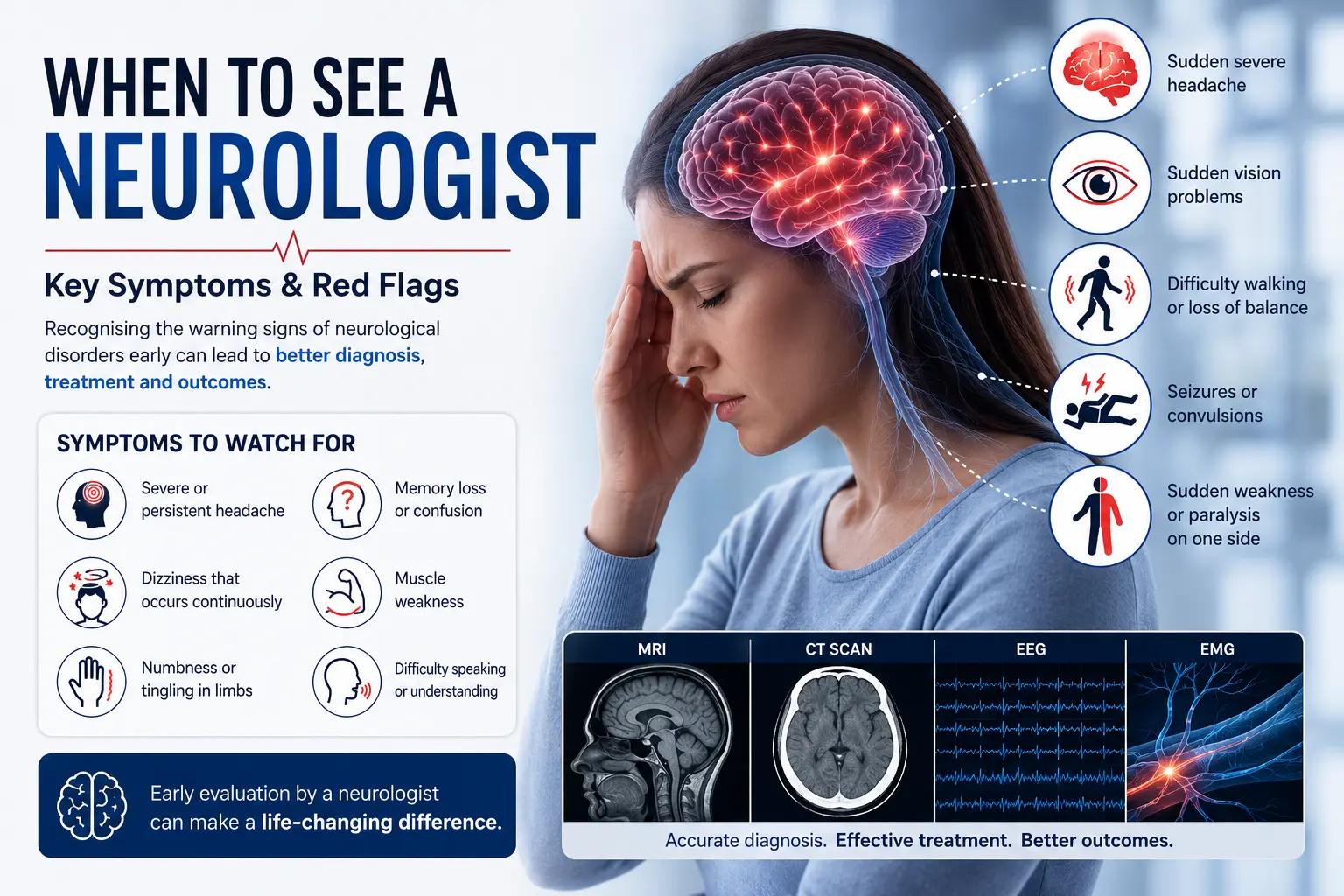
If you don’t understand when to consult a neurologist, you may be at risk for an improper diagnosis and delay in your care. Neurological disorders often have mild symptoms that go unnoticed or are mistaken for being insignificant. Finding out you require a neurologist sooner rather than later can make a dramatic difference in how quickly and how well you treat a neurological disorder.
Understanding common neurological disorders can help patients recognize symptoms earlier and seek timely medical care.
If you are experiencing any abnormal or prolonged symptoms, you should consult a specialist such as Dr. Miguel Ley-Nacher for an accurate diagnosis and appropriate treatment.
What Does a Neurologist Treat?
A neurologist is a doctor who specializes in diagnosing and treating diseases and disorders of the nervous system, including the brain, spinal cord, and nerves. Neurologists may treat a variety of common conditions, such as migraines, through testing and treating their cause, to more complex conditions such as epilepsy, multiple sclerosis, and Parkinson’s Disease.
In addition to treating patients suffering from common neurological conditions or disorders, a neurologist may evaluate unexplained symptoms such as numbness or tingling that could indicate a more serious underlying neurological condition.
Common Symptoms That Warrant Neurological Evaluation
Now and again, a symptom that appears to be mild or insignificant may suggest a larger problem occurring in the neurological system. The following are some neurological symptoms that should be monitored.
- A headache that lasts longer than one day or is severe.
- Dizziness that occurs continuously.
- Numbness or tingling in the arms and/or legs.
- Memory loss or confusion that occurs more than once.
- Muscles become weaker.
- Difficulty speaking or understanding language
If these symptoms manifest, it may signal that the individual could benefit from having a neurological examination.
Persistent headaches may sometimes indicate more serious neurological conditions and should not be ignored.
Recurring dizziness or balance problems may require neurological evaluation to rule out underlying nervous system disorders.
Warning Signs That Require Immediate Neurological Attention
Certain symptoms can be tracked, but other symptoms need to be addressed immediately, and it’s important to identify the symptoms of a neurological disorder:
- Sudden onset of intense headache
- Having one or more seizures or convulsions.
- Sudden loss of vision in either eye, or having double vision.
- Having coordination problems or difficulty walking.
- Sudden weakness or paralysis in your body, especially on only one side of your body.
- Fainting suddenly and without warning, or losing consciousness.
These conditions, or any sign that you have a little bit of brain damage, indicate that you should see a neurologist as soon as possible. These are all signs that you may have an emergency requiring treatment by a neurologist.
How Neurologists Diagnose Brain and Nervous System Disorders
Neurologists rely on a range of clinical and diagnostic approaches to identify the cause of patient symptoms. These techniques typically include:
- Comprehensive medical and symptom histories
- Neurological assessments (evaluating your reflexes, balance, and cognitive ability)
- Imaging studies (MRI or CT)
- Electrophysiology (EEG or EMG) to assess brain activity or muscle function, respectively.
All these tools help neurologists generate an accurate evaluation of the neurological problem and thus develop an appropriate treatment plan. An accurate diagnosis is also essential for optimal care through the management of the patient’s condition or disease.
Neurological Conditions That Often Require Specialist Care
There are several medical conditions that typically use the services provided by a neurology specialist. Those include:
- Chronic migraine
- Epileptic seizures
- Stroke and cerebrovascular diseases
- Parkinson’s disease
- Multiple sclerosis
- Nerve injury
If you are experiencing any symptoms or ongoing issues with any of the above conditions, you must recognise when you need to see a neurologist and obtain the care that is appropriate to your particular situation as soon as possible.
If you are experiencing persistent headaches, dizziness, numbness, memory problems, seizures, or weakness, early neurological evaluation can help identify the cause and improve treatment outcomes. Consult Dr Miguel Ley Nacher for expert neurological care in Dubai. Dr. Miguel Ley Nacher is a leading Consultant Neurologist in Dubai known for delivering world-class neurological care with compassion and precision.
FAQs - Frequently Asked Questions
Q1. What symptoms mean I should see a neurologist?
Ans – You should consider consulting a neurologist if you are experiencing headaches, dizziness, numbness, memory problems, and muscle weakness.
Q2. How do I know if my headaches need a neurologist’s attention?
Ans – You should consider consulting a neurologist if your headaches are severe and recurring and you are experiencing symptoms such as vision problems, nausea, and confusion.
Q3. When should I see a neurologist after a seizure?
Ans – You should consider consulting a neurologist immediately after a seizure episode, especially if it is your first seizure or if you are experiencing recurring seizures.
Q4. Can a general doctor diagnose a neurological disorder?
Ans – A general physician can only refer a patient to a neurologist for further diagnosis and treatment; a neurologist performs special tests for the diagnosis and treatment of a neurological disorder.
Q5. What tests does a neurologist use to diagnose conditions?
Ans – A neurologist uses an MRI scan, CT scan, EEG, EMG, and a neurological examination to make a diagnosis.
Related Services
Recent Blogs
Book An Appointment
About the author

Dr. Miguel Ley Nacher, MD, MSc, PhD
Consultant Neurologist & Epilepsy Specialist
MD, MSc, PhD
Consultant Neurologist
Specialist in Epilepsy & Neurophysiology
17+ Years of Experience
Al Zahra Hospital Dubai
Dr. Miguel Ley Nacher is an internationally trained Consultant Neurologist and clinical psychologist with extensive expertise in epilepsy, stroke management, movement disorders, and advanced neurophysiology. With over 17 years of experience, he is recognized for delivering evidence-based neurological care focused on accurate diagnosis, advanced treatment techniques, and long-term patient wellbeing.
He completed his medical education and specialized neurology training in Spain, followed by advanced epilepsy fellowship training in the United States at Rush University Medical Center, Chicago. Dr. Miguel also holds a Master of Science (MSc) degree and a PhD in Biomedicine, reflecting his strong academic and research background in neurological sciences.
Dr. Miguel specializes in epilepsy management, long-term video EEG monitoring (VEEG), stroke care, headaches and migraines, Parkinson’s disease, multiple sclerosis, dementia, peripheral neuropathies, and neuromodulation therapies. His approach combines advanced neurological expertise with compassionate, patient-centered care tailored to each individual’s condition and treatment goals.
He is an active member of leading international neurological organizations, including the American Academy of Neurology (AAN), American Epilepsy Society (AES), European Academy of Neurology (EAN), and the International League Against Epilepsy (ILAE).
Medical Disclaimer
This article is intended for informational and educational purposes only and should not be considered medical advice, diagnosis, or treatment. Always consult a qualified healthcare professional regarding any neurological symptoms or medical concerns before making healthcare decisions. Medically reviewed by Dr. Miguel Ley Nacher, Consultant Neurologist & Epilepsy Specialist.