
Why Do I Feel Dizzy Suddenly? Causes, Stroke Risk & When to Worry
- Medically Reviewed By Dr. Miguel Ley Nacher - MD, MSD, PhD | Consultant Neurologist
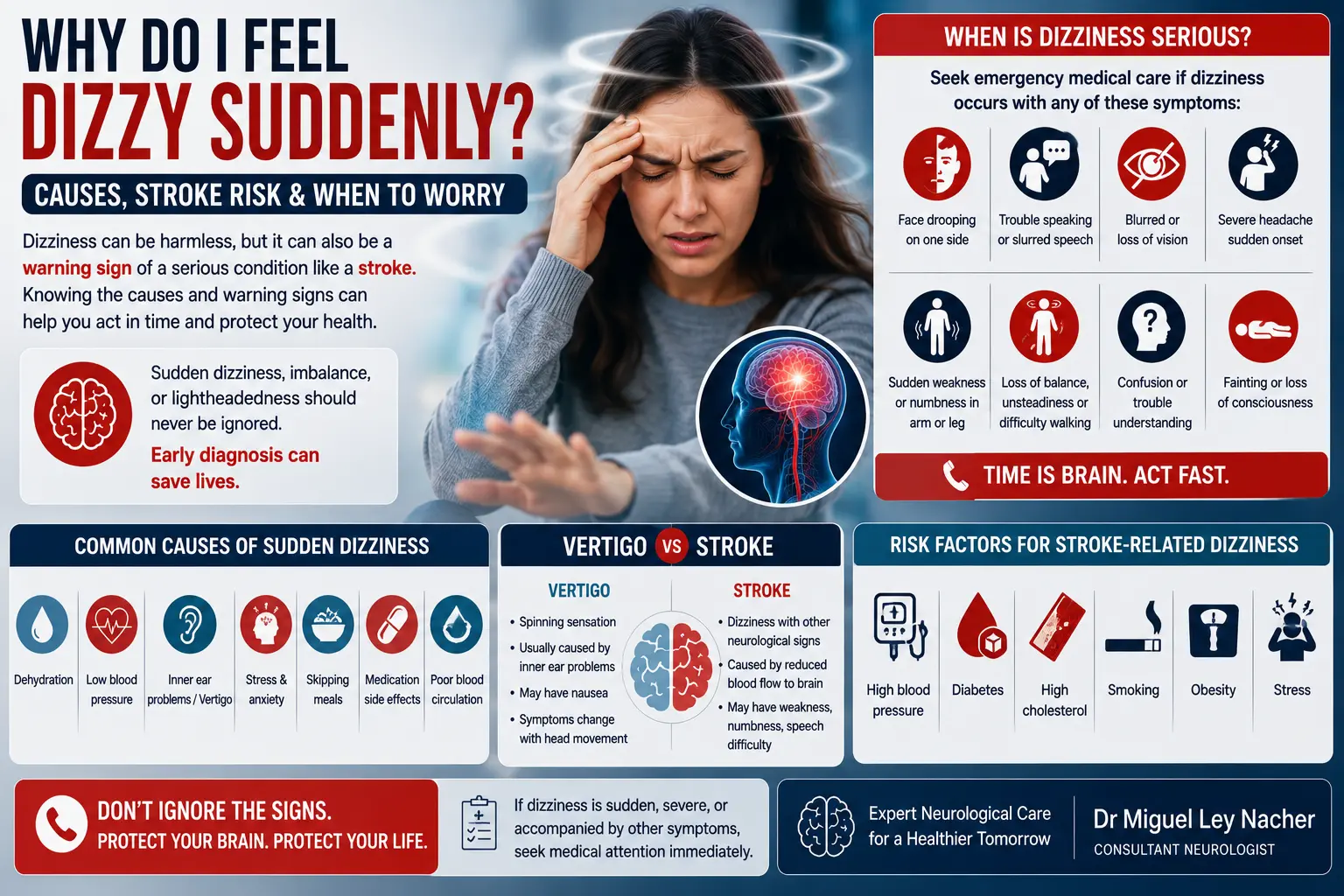
Feeling dizzy without warning can be frightening, especially when it happens during everyday activities like walking, standing up, or working. Many people experience dizziness at some point, but sudden episodes should never be ignored. Understanding sudden dizziness causes can help identify whether the problem is temporary or a sign of a more serious medical condition.
Recognizing early warning signs of mini stroke symptoms may help prevent serious neurological complications.
Dizziness can feel different for every person. Some describe it as spinning, while others feel weak, faint, or unsteady. Common causes of sudden lightheadedness include dehydration, low blood pressure, stress, anxiety, inner ear problems, or skipping meals. In many cases, the symptoms may improve within a short time, but ongoing or severe dizziness should never be ignored and requires prompt medical evaluation.
A sudden loss of balance can sometimes be linked to neurological problems. Doctors carefully assess these symptoms because certain types of dizziness may be a sign of reduced blood flow to the brain. Identifying dizziness-related stroke symptoms early is extremely important, as quick medical attention can help prevent serious complications and improve recovery outcomes.
Sudden Dizziness and Imbalance
One of the most concerning experiences is sudden dizziness and imbalance that appears without explanation. Some people may feel as though the room is spinning or find it difficult to walk in a straight line. These symptoms can occur for several reasons, including ear infections, migraines, side effects from medications, or problems related to blood circulation.
For some people, the symptoms become more noticeable when they change positions suddenly, such as standing up too quickly. Although these episodes can sometimes be harmless, frequent dizziness or ongoing balance problems should not be ignored and may require medical attention. Understanding when dizziness is serious can help people seek timely medical care instead of waiting for symptoms to worsen.
Doctors often help patients understand the difference between inner ear problems and neurological emergencies. Knowing how vertigo symptoms differ from stroke symptoms is important because both conditions can cause dizziness or balance issues. However, a stroke is more likely to include serious warning signs such as slurred speech, numbness, confusion, facial drooping, or weakness on one side of the body.
Stroke Warning Signs That Can Appear With Dizziness
Certain dizziness stroke symptoms require immediate emergency attention. Sudden confusion, difficulty speaking, blurred vision, a severe headache, facial drooping, or loss of coordination along with dizziness can be warning signs of a stroke. In such situations, immediate medical attention is critical because delaying treatment may increase the risk of permanent brain damage and other serious complications.
Sudden numbness or facial drooping alongside dizziness may also indicate stroke-related neurological symptoms that require immediate medical attention.
Many people assume that dizziness is only related to tiredness or dehydration, but that is not always the case. In some situations, sudden dizziness can be linked to serious conditions such as strokes, heart problems, severe infections, or poor blood circulation. Ignoring these symptoms may delay important medical treatment and increase the risk of complications.
Medical professionals encourage people to pay close attention to recurring symptoms. Ongoing spinning sensations, unexplained weakness, or repeated balance problems should always be evaluated by a doctor to identify the underlying cause and prevent possible complications. Recognizing causes of sudden lightheadedness early may help prevent larger health complications in the future.
Vertigo vs Stroke
Understanding vertigo vs stroke differences can reduce confusion during a medical emergency. Vertigo is commonly caused by problems affecting the inner ear and often creates a strong spinning sensation or feeling of motion. A stroke, however, may cause dizziness along with other serious symptoms such as trouble speaking, facial numbness, severe headaches, weakness, or difficulty moving parts of the body.
Understanding when to see a neurologist for persistent dizziness or balance problems can help improve treatment outcomes.
People who experience sudden dizziness and loss of balance sometimes wait too long to seek medical help because they expect the symptoms to go away on their own. However, delaying treatment can be dangerous, especially if the dizziness is connected to a stroke, heart problem, or another serious medical condition.
Age and lifestyle can also play an important role in dizziness related to strokes. Older adults generally face a higher risk of stroke-related balance problems, but younger people can also experience these conditions, especially if other health risk factors are present. High blood pressure, smoking, obesity, diabetes, and stress can increase the risk of developing dizziness stroke symptoms at any age.
When Is Dizziness Serious
Many people ask doctors, When is dizziness serious enough to seek emergency help? The seriousness of dizziness often depends on how intense it is, how frequently it happens, and whether other symptoms appear at the same time. Dizziness becomes more concerning when it starts suddenly, happens repeatedly, or occurs along with chest pain, numbness, severe headaches, fainting, or trouble speaking.
One common reason for sudden lightheadedness is dehydration. When the body lacks enough fluids, blood pressure can drop and temporarily reduce blood flow to the brain. However, if drinking water and resting do not improve the symptoms, medical attention may be needed.
Doctors also pay close attention to recurring episodes of sudden dizziness because they can sometimes be linked to long-term conditions affecting the heart, brain, or nervous system. Ignoring repeated symptoms may allow underlying health problems to become more serious over time.
Patients often struggle to understand vertigo vs stroke because both conditions can create spinning sensations and nausea. The main difference is that stroke-related dizziness is often accompanied by neurological symptoms such as confusion, weakness, numbness, facial drooping, or difficulty speaking.
Common Causes of Sudden Lightheadedness and Dizziness
There are many possible reasons for sudden lightheadedness, and the causes can range from minor issues to more serious medical conditions. Anxiety attacks, low blood sugar, medication side effects, anemia, infections, and poor blood circulation are all common factors that may lead to sudden dizziness or feelings of faintness.
At the same time, persistent sudden dizziness and imbalance should never be ignored, especially if daily activities become difficult. Problems with coordination and walking may increase the risk of falls and injuries.
People who experience repeated dizziness along with possible stroke symptoms should seek medical attention right away. Early diagnosis and prompt treatment can improve recovery chances and help reduce the risk of long-term complications or permanent damage.
Healthcare professionals continue educating patients about when dizziness is serious because many people dismiss symptoms until they become severe. Sudden dizziness combined with numbness, vision problems, confusion, or difficulty speaking should always be treated as a medical emergency. These symptoms may indicate a serious condition that requires immediate medical care.
Lifestyle habits can also make a big difference in preventing dizziness episodes. Staying hydrated, maintaining healthy blood sugar levels, getting enough sleep, and managing stress effectively may help reduce certain causes of sudden dizziness.
Understanding the difference between vertigo and stroke symptoms can help families respond more quickly during emergencies. If dizziness appears suddenly along with slurred speech, weakness, facial drooping, or confusion, emergency medical services should be contacted immediately.
In many situations, identifying the causes of sudden lightheadedness early allows doctors to treat the condition before it becomes more serious. Early diagnosis and timely treatment often improve recovery outcomes and help reduce the risk of long-term complications.
Recurring sudden dizziness and imbalance can significantly affect quality of life, making it difficult to work, drive, or perform routine tasks comfortably. Seeking medical guidance early may help prevent worsening symptoms.
Seeking Professional Help
Finally, learning about when dizziness is serious can protect both individuals and their loved ones from dangerous delays in treatment. Dizziness may sometimes be harmless, but it can also signal a serious medical emergency. Recognizing warning signs and paying attention to dizziness stroke symptoms can ultimately save lives.
Schedule an appointment with Dr Miguel Ley Nacher
FAQs - Frequently Asked Questions
Q1. Why do I feel dizzy even when I’m sitting still?
Ans – Dizziness while sitting still can happen for several reasons, including inner ear problems, low blood pressure, dehydration, anxiety, or circulation issues. In some cases, it may also be linked to medications or neurological conditions. If it happens often or becomes severe, it is best to speak with a doctor.
Q2. Can dizziness come and go in serious conditions?
Ans – Yes, dizziness can appear and disappear even in serious medical conditions. Problems related to blood circulation, heart health, or the nervous system may cause recurring episodes that come and go over time.
Q3. Is sudden dizziness without other symptoms dangerous?
Ans – Sometimes sudden dizziness may be caused by something mild, such as dehydration or low blood sugar. However, if the dizziness is intense, unexpected, or keeps returning, it should not be ignored because it can occasionally signal a more serious health issue.
Q4. How long does dizziness last before it becomes serious?
Ans – There is no exact timeframe, but dizziness that lasts for several hours, keeps returning, or becomes worse over time should be medically evaluated. Immediate care is especially important if it occurs with chest pain, confusion, weakness, or trouble speaking.
Q5. Can anxiety or panic attacks cause sudden dizziness?
Ans – Yes, anxiety and panic attacks can trigger sudden dizziness or lightheadedness. Rapid breathing, stress hormones, and increased heart rate during anxiety episodes may affect balance and blood flow temporarily.
Q6. What is the fastest way to stop dizziness?
Ans – Sitting or lying down safely, drinking water, and taking slow deep breaths may help reduce mild dizziness. Avoid sudden movements and rest until symptoms improve. If dizziness is severe or continues, medical attention may be needed.
Q7. Can dehydration cause sudden dizziness instantly?
Ans – Yes, dehydration can quickly lower blood pressure and reduce blood flow to the brain, which may lead to sudden dizziness or faintness. This is more common during hot weather, illness, or after intense physical activity.
Q8. Should I go to the ER for sudden dizziness?
Ans – Emergency care is recommended if sudden dizziness occurs along with symptoms such as chest pain, numbness, slurred speech, confusion, severe headache, fainting, or difficulty walking. These signs may indicate a serious medical emergency that requires immediate treatment.
Related Services
Recent Blogs
Book An Appointment
About the author

Dr. Miguel Ley Nacher, MD, MSc, PhD
Consultant Neurologist & Epilepsy Specialist
MD, MSc, PhD
Consultant Neurologist
Specialist in Epilepsy & Neurophysiology
17+ Years of Experience
Al Zahra Hospital Dubai
Dr. Miguel Ley Nacher is an internationally trained Consultant Neurologist and clinical psychologist with extensive expertise in epilepsy, stroke management, movement disorders, and advanced neurophysiology. With over 17 years of experience, he is recognized for delivering evidence-based neurological care focused on accurate diagnosis, advanced treatment techniques, and long-term patient wellbeing.
He completed his medical education and specialized neurology training in Spain, followed by advanced epilepsy fellowship training in the United States at Rush University Medical Center, Chicago. Dr. Miguel also holds a Master of Science (MSc) degree and a PhD in Biomedicine, reflecting his strong academic and research background in neurological sciences.
Dr. Miguel specializes in epilepsy management, long-term video EEG monitoring (VEEG), stroke care, headaches and migraines, Parkinson’s disease, multiple sclerosis, dementia, peripheral neuropathies, and neuromodulation therapies. His approach combines advanced neurological expertise with compassionate, patient-centered care tailored to each individual’s condition and treatment goals.
He is an active member of leading international neurological organizations, including the American Academy of Neurology (AAN), American Epilepsy Society (AES), European Academy of Neurology (EAN), and the International League Against Epilepsy (ILAE).
Medical Disclaimer
This article is intended for informational and educational purposes only and should not be considered medical advice, diagnosis, or treatment. Always consult a qualified healthcare professional regarding any neurological symptoms or medical concerns before making healthcare decisions. Medically reviewed by Dr. Miguel Ley Nacher, Consultant Neurologist & Epilepsy Specialist.