
Sudden Anger Outbursts: Is It a Brain Disorder, Stress, or Something Serious?
- Medically Reviewed By Dr. Miguel Ley Nacher - MD, MSD, PhD | Consultant Neurologist
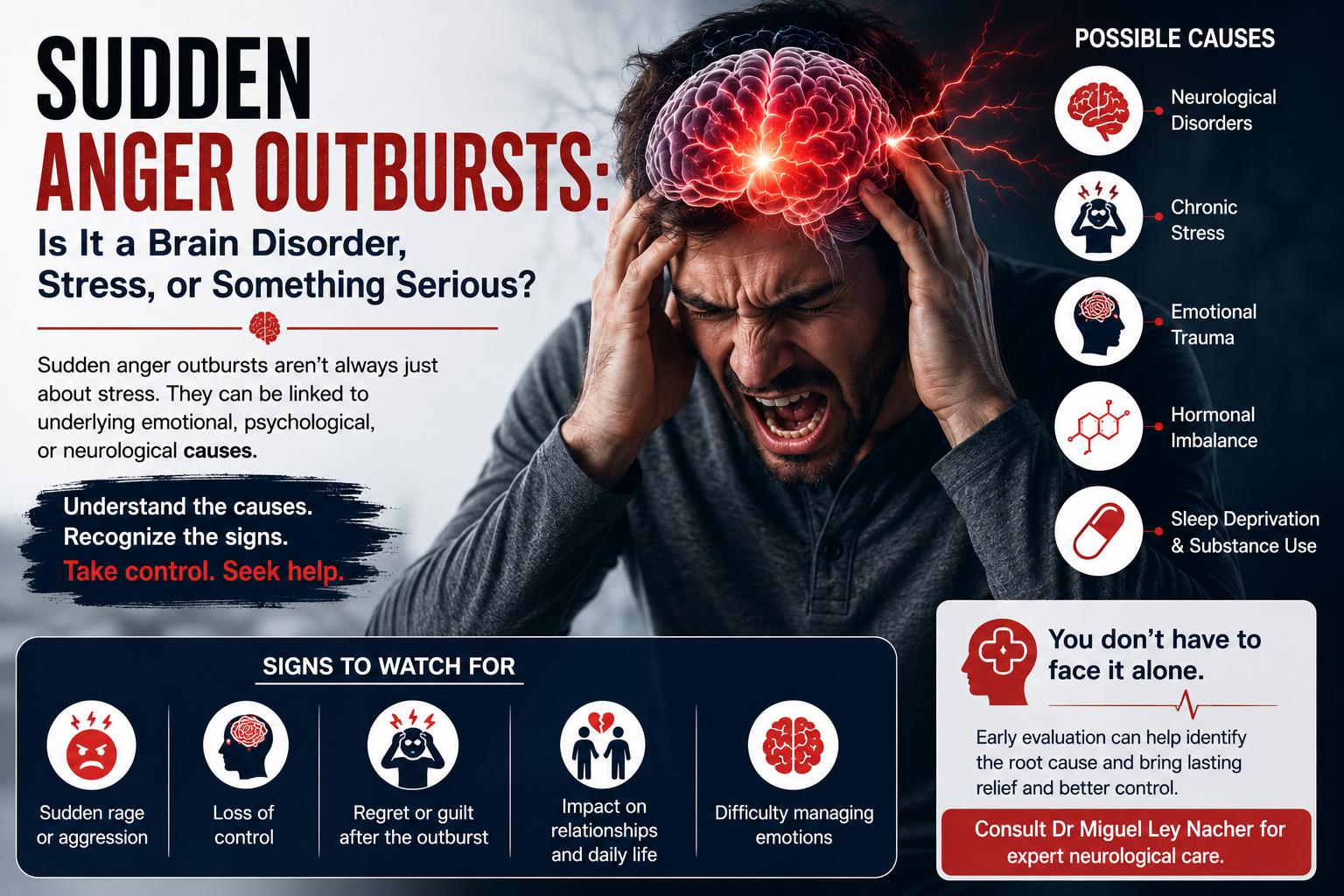
Have you ever felt a wave of intense anger hit you out of nowhere, so strong that it feels uncontrollable? These sudden anger outbursts can be confusing, not just for the person experiencing them but also for those around them. One moment, everything feels normal, and the next, you’re caught in a storm of emotions. It raises an important question: is this just stress, or could it be something deeper, like an anger issues brain disorder?
Some emotional and behavioural changes may also be linked to underlying neurological disorders affecting brain function and emotional regulation.
Let’s explore what’s really going on behind these emotional surges and whether they signal something more serious.
Understanding Sudden Anger Outbursts
Sudden anger outbursts are episodes where a person reacts with extreme anger, often disproportionate to the situation. These reactions may include shouting, aggression, or even physical expressions of rage. While everyone experiences anger, repeated sudden rage episodes that feel uncontrollable can point toward underlying issues.
For many people, these outbursts are not intentional. They often feel like a loss of control, followed by regret or confusion. This is why identifying the causes of sudden anger outbursts is crucial.
Common Causes of Sudden Anger Outbursts
There isn’t a single explanation for why these episodes happen. The causes of sudden anger outbursts can vary from psychological stress to biological factors.
One major factor is chronic stress. When stress builds up over time, the brain becomes more reactive, making even small triggers feel overwhelming. This is where the debate of stress vs brain disorder anger comes in. Stress-related anger is usually linked to external pressures like work, relationships, or financial worries.
Another contributor is unresolved emotional trauma. Past experiences can resurface in the form of sudden rage episodes, especially when certain triggers are activated.
Sleep deprivation, hormonal imbalances, and substance use can also play a role. These are often overlooked uncontrollable anger reasons that can significantly impact emotional regulation.
Could It Be a Brain Disorder?
In some cases, frequent anger outbursts in adults may be linked to neurological or psychiatric conditions. This is where the idea of an anger issues brain disorder becomes relevant.
One condition often associated with this is Intermittent Explosive Disorder (IED). People with this condition experience repeated episodes of impulsive aggression. Intermittent explosive disorder symptoms include intense anger, verbal or physical aggression, and a sense of relief after the outburst, followed by guilt.
Understanding intermittent explosive disorder symptoms can help differentiate between normal anger and a clinical condition. If these symptoms occur frequently and disrupt daily life, professional evaluation is essential.
Neurological Causes of Anger
The brain plays a significant role in how we process emotions. Certain neurological causes of anger involve imbalances in brain chemicals like serotonin and dopamine. These chemicals regulate mood and impulse control.
Damage or dysfunction in areas of the brain such as the amygdala or prefrontal cortex can also lead to poor emotional regulation. This strengthens the argument that some cases of sudden anger outbursts are not just behavioural but biological.
Additionally, conditions like ADHD, bipolar disorder, or even traumatic brain injuries can contribute to sudden rage episodes. These neurological causes of anger highlight that not all anger is purely emotional; it can be deeply rooted in brain function.
Recognizing early neurological symptoms can help determine when to see a neurologist for further evaluation.
Stress vs Brain Disorder Anger
It’s important to understand the difference between stress vs brain disorder anger. Stress-induced anger is usually situational and may improve once the stressor is removed or managed.
On the other hand, anger linked to an anger issues brain disorder tends to be persistent, unpredictable, and less tied to external events. These outbursts may occur even in calm situations, making them harder to control.
Recognizing this distinction helps in choosing the right approach to treatment. While stress management techniques may help one person, another may require medical or psychological intervention when dealing with anger outbursts in adults.
Uncontrollable Anger Reasons You Shouldn’t Ignore
Sometimes, the uncontrollable anger reasons go beyond what we immediately notice. Poor emotional coping skills, lack of communication, and suppressed feelings can all build up over time.
In many cases, anger becomes a default response because it feels easier than dealing with vulnerability or fear. This is especially true in anger outbursts in adults who may not have learned healthy emotional expression earlier in life.
Repeated sudden anger outbursts can also affect relationships, work performance, and overall mental health. Ignoring these signs can lead to long-term consequences.
When Should You Seek Help?
If sudden rage episodes are frequent, intense, and impacting your daily life, it’s important to seek professional help. A mental health professional can assess whether the issue is related to stress, trauma, or an anger-related brain disorder.
Therapies like Cognitive Behavioural Therapy (CBT) can help identify triggers and develop healthier coping mechanisms. In cases involving neurological causes of anger, medication may also be recommended.
Recognizing intermittent explosive disorder symptoms early can make a significant difference in managing the condition effectively.
When Should You Seek Help?
Sudden anger outbursts are more than just moments of frustration; they can be signals from your mind and body that something needs attention. Whether the root lies in stress, emotional experiences, or a deeper anger-related brain disorder, understanding the causes of sudden anger outbursts is the first step toward control and healing.
Instead of ignoring or suppressing these feelings, acknowledging them can lead to better emotional health. After all, anger is a natural emotion, but when it turns into uncontrollable patterns driven by uncontrollable reasons, it deserves to be understood, not dismissed.
If sudden anger outbursts are becoming frequent, intense, or difficult to control, professional evaluation may help identify underlying emotional, psychological, or neurological causes. Consult Dr Miguel Ley Nacher for expert neurological assessment and guidance. Schedule an appointment with Dr Miguel Ley Nacher
FAQs - Frequently Asked Questions
Q1. What causes sudden anger outbursts in adults?
Ans – Sudden anger outbursts in adults can have multiple triggers. Common causes include chronic stress, unresolved emotional trauma, hormonal imbalances, sleep deprivation, and mental health conditions. In some cases, underlying neurological factors or poor emotional regulation skills can also contribute. Identifying personal triggers is key to managing these episodes effectively.
Q2. Can anger outbursts be a sign of a brain disorder?
Ans – Yes, in some cases, anger outbursts can be linked to a brain-related condition. Disorders affecting the brain—such as impulse control disorders, traumatic brain injury, or certain psychiatric conditions—can lead to difficulty managing emotions. If anger feels intense, frequent, and uncontrollable, it may indicate more than just situational stress.
Q3. What is intermittent explosive disorder?
Ans – Intermittent Explosive Disorder (IED) is a behavioural condition characterised by repeated, sudden episodes of intense anger or aggression that are disproportionate to the situation. People with IED often feel a loss of control during these episodes and may experience relief afterwards, followed by guilt or regret. It is a recognised mental health condition that can be treated with therapy and, in some cases, medication.
Q4. When should I see a doctor for anger issues?
Ans – You should consider seeing a doctor if your anger is frequent, intense, or affecting your relationships, work, or daily life. If you experience sudden rage without clear triggers, feel unable to control your reactions, or notice physical aggression, professional help is important. Early intervention can prevent the issue from worsening.
Q5. Can stress alone cause sudden rage?
Ans – Yes, stress can be a major factor in sudden rage. When stress builds up over time, it lowers your ability to cope with everyday situations, making you more reactive. However, if anger episodes are extreme or persistent, it may not be stress alone—other psychological or neurological factors could also be involved.
Q6. How are anger disorders diagnosed?
Ans – Anger disorders are typically diagnosed through a detailed psychological evaluation. A mental health professional will assess your behavior patterns, emotional responses, triggers, and medical history. There are no single lab tests, but structured interviews and questionnaires help determine whether the anger is part of a specific disorder.
Q7. Can neurological problems cause aggression?
Ans – Yes, certain neurological conditions can lead to aggression or sudden anger. Issues affecting brain areas responsible for impulse control and emotional regulation—such as the prefrontal cortex or amygdala—can result in aggressive behaviour. Conditions like traumatic brain injury, epilepsy, or neurodegenerative disorders may also contribute.
Related Services
Recent Blogs
Book An Appointment
About the author

Dr. Miguel Ley Nacher, MD, MSc, PhD
Consultant Neurologist & Epilepsy Specialist
MD, MSc, PhD
Consultant Neurologist
Specialist in Epilepsy & Neurophysiology
17+ Years of Experience
Al Zahra Hospital Dubai
Dr. Miguel Ley Nacher is an internationally trained Consultant Neurologist and clinical psychologist with extensive expertise in epilepsy, stroke management, movement disorders, and advanced neurophysiology. With over 17 years of experience, he is recognized for delivering evidence-based neurological care focused on accurate diagnosis, advanced treatment techniques, and long-term patient wellbeing.
He completed his medical education and specialized neurology training in Spain, followed by advanced epilepsy fellowship training in the United States at Rush University Medical Center, Chicago. Dr. Miguel also holds a Master of Science (MSc) degree and a PhD in Biomedicine, reflecting his strong academic and research background in neurological sciences.
Dr. Miguel specializes in epilepsy management, long-term video EEG monitoring (VEEG), stroke care, headaches and migraines, Parkinson’s disease, multiple sclerosis, dementia, peripheral neuropathies, and neuromodulation therapies. His approach combines advanced neurological expertise with compassionate, patient-centered care tailored to each individual’s condition and treatment goals.
He is an active member of leading international neurological organizations, including the American Academy of Neurology (AAN), American Epilepsy Society (AES), European Academy of Neurology (EAN), and the International League Against Epilepsy (ILAE).
Medical Disclaimer
This article is intended for informational and educational purposes only and should not be considered medical advice, diagnosis, or treatment. Always consult a qualified healthcare professional regarding any neurological symptoms or medical concerns before making healthcare decisions. Medically reviewed by Dr. Miguel Ley Nacher, Consultant Neurologist & Epilepsy Specialist.