
Is Numbness a Sign of Stroke? Warning Signs You Should Never Ignore
- Medically Reviewed By Dr. Miguel Ley Nacher - MD, MSD, PhD | Consultant Neurologist
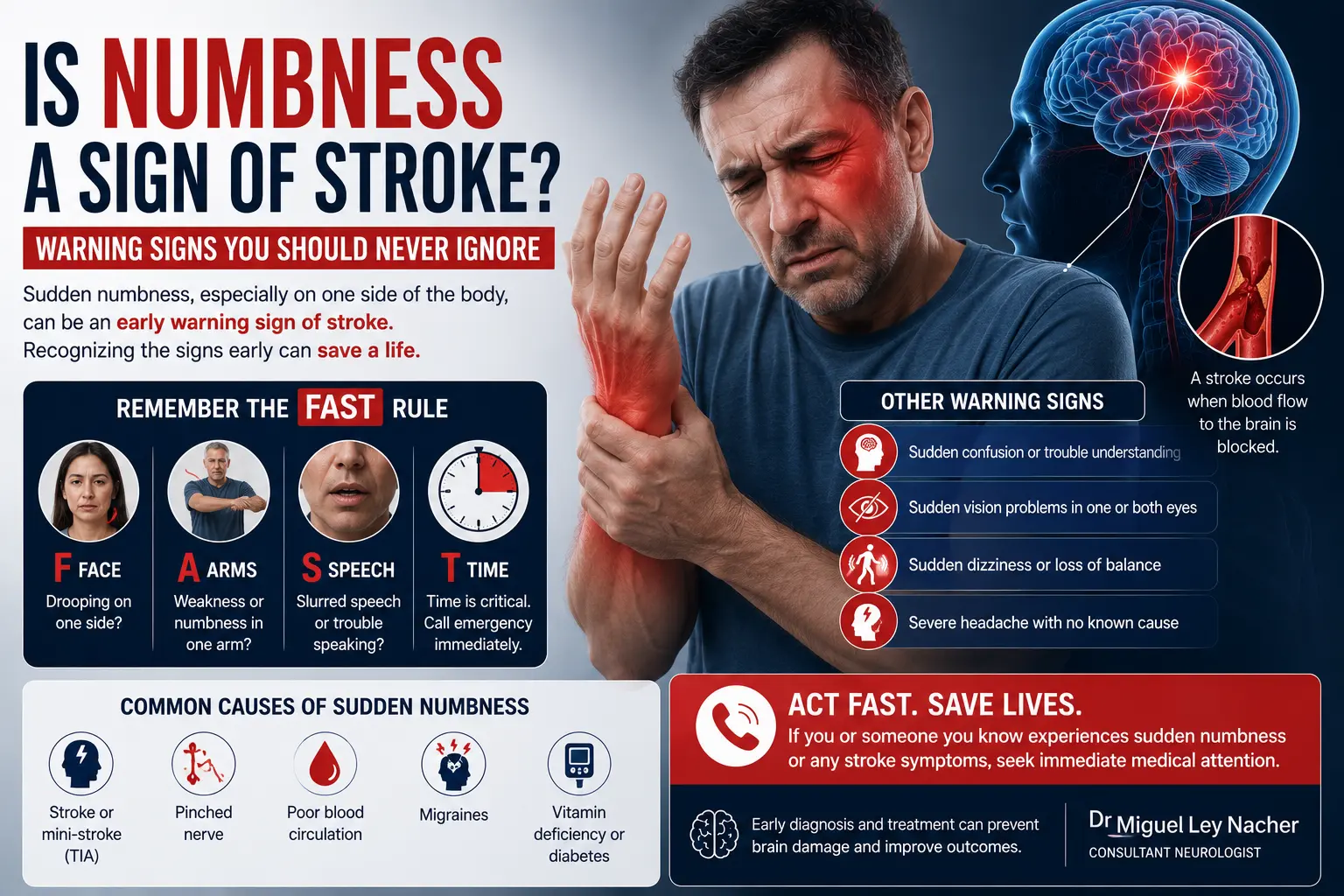
Have you ever experienced sudden numbness in your arm, face, or leg and wondered if it’s something serious? It’s easy to ignore such sensations, especially if they disappear quickly. But the question many people ask is: Is Numbness a Sign of Stroke? The short answer is yes—it can be. And recognizing it early could save a life.
Understanding early neurological disorder symptoms can help patients recognize when numbness requires immediate medical attention.
At the same time, our body often gives mixed signals. Sometimes, physical symptoms like numbness may appear alongside emotional or neurological changes, such as sudden rage episodes or unexplained mood shifts. Understanding how these symptoms connect can help you take the right action at the right time.
Understanding Numbness and Stroke
When we talk about Is Numbness a Sign of Stroke?, we are referring to one of the most common early warning signs. A stroke occurs when blood flow to the brain is disrupted, depriving brain cells of oxygen. This can lead to sudden numbness or weakness, especially on one side of the body.
If you suddenly feel numbness in your face, arm, or leg-particularly on one side- it’s important not to ignore it. The answer to Is Numbness a Sign of Stroke? becomes even more critical when it appears with other symptoms like confusion, trouble speaking, or loss of balance.
Recognizing these warning signs early may help patients understand when to see a neurologist for urgent neurological evaluation.
Emotional and Neurological Signals You Shouldn’t Ignore
While physical symptoms are more commonly recognized, emotional changes can also signal underlying neurological issues. For instance, some people experience anger outbursts in adults that seem out of character. These emotional shifts can sometimes be linked to brain health.
Conditions involving the brain may present themselves in unexpected ways. For example, neurological causes of anger can lead to mood instability, irritability, or even sudden rage episodes. While these are not direct signs of a stroke, they can indicate that something isn’t functioning properly in the brain.
The Overlap Between Emotional Health and Brain Function
You might wonder how emotions tie into a condition like stroke. The brain controls both physical and emotional responses, so disruptions can affect both. Some people dealing with chronic stress or neurological imbalance may show uncontrollable anger for reasons without realizing the root cause.
In some cases, what appears to be emotional distress may actually be linked to an anger-related brain disorder. This is why doctors often look at both physical and behavioural symptoms when evaluating brain health.
Why Emotional Symptoms Matter
Emotional changes like irritability or aggression are often overlooked, but they can be early indicators of brain-related conditions. For instance, intermittent explosive disorder symptoms include sudden, intense anger that feels disproportionate to the situation.
While these symptoms are not directly linked to stroke, they may coexist with other neurological issues. Recognizing intermittent explosive disorder symptoms can help in identifying whether emotional instability is part of a larger health concern.
Similarly, recurring sudden rage episodes or patterns linked to uncontrollable anger reasons should not be ignored, especially if they appear alongside physical warning signs like numbness.
Causes Behind These Symptoms
Understanding the root causes is key. While we focus on Is Numbness a Sign of Stroke?, it’s also important to consider other contributing factors. For example, emotional instability may stem from various triggers, including stress, trauma, or even the causes of sudden anger outbursts.
The causes of sudden anger outbursts can range from psychological stress to underlying neurological imbalances. These causes sometimes overlap with broader brain health issues, reinforcing the importance of a holistic approach.
When both physical symptoms (like numbness) and emotional symptoms (like anger) occur together, it strengthens the need for medical attention.
When Should You Seek Help?
If you’re experiencing numbness and wondering, Is Numbness a Sign of Stroke?, don’t wait for it to worsen. Seek immediate medical help, especially if the numbness is sudden and accompanied by other symptoms.
At the same time, don’t ignore emotional warning signs. Frequent anger outbursts in adults, recurring sudden rage episodes, or patterns linked to uncontrollable anger reasons may indicate that your brain health needs attention.
A healthcare professional can assess whether your symptoms are related to stress, an anger issues brain disorder, or something more serious like a stroke.
How Dr Miguel Ley Nacher Can Help You Understand
So, Is Numbness a Sign of Stroke? Yes, it absolutely can be, and it’s one of the most important warning signs you should never ignore. But your body doesn’t always send signals in isolation. Emotional changes, such as those linked to neurological causes of anger or intermittent explosive disorder symptoms, can also provide valuable clues about your overall brain health.
Understanding the connection between physical and emotional symptoms helps you stay more aware and proactive. Whether it’s identifying the causes of sudden anger outbursts or recognizing the difference between stress vs brain disorder anger, every insight brings you closer to better health.
If you experience sudden numbness, weakness, speech difficulty, or facial drooping, seek immediate medical attention. Early neurological evaluation can help identify stroke symptoms quickly and improve treatment outcomes. Consult Dr Miguel Ley Nacher for expert neurological care. If you have any questions and want the most accurate evaluation, don’t hesitate to schedule a consultation with Dr. Miguel Ley Nacher
FAQs - Frequently Asked Questions
Q1. Can numbness be an early warning sign of a stroke?
Ans – Yes, numbness can be an early warning sign of a stroke. Sudden numbness—especially on one side of the body, such as the face, arm, or leg—is one of the most common symptoms. If it appears suddenly and is accompanied by speech difficulty or weakness, it should be treated as a medical emergency.
Q2. How do I know if numbness is serious?
Ans – Numbness is considered serious if it comes on suddenly, affects one side of the body, or is paired with symptoms like confusion, trouble speaking, vision problems, or loss of coordination. Persistent or worsening numbness should always be evaluated by a doctor.
Q3. Which side numbness indicates stroke?
Ans – Stroke-related numbness usually affects one side of the body—either the left or the right. For example, numbness in the left arm and face could indicate a stroke affecting the right side of the brain, and vice versa.
Q4. Can numbness come and go in stroke?
Ans – Yes, numbness can sometimes come and go in what’s known as a transient ischemic attack (TIA), often called a “mini-stroke.” Even if symptoms disappear quickly, it’s still a warning sign and requires immediate medical attention.
Q5. How long does numbness last before a stroke?
Ans – There is no fixed duration. Numbness can appear suddenly during a stroke or briefly before it in the case of a TIA. Even if it lasts only a few minutes, it should not be ignored, as it may signal an increased risk of a full stroke.
Q6. Can anxiety cause numbness similar to stroke?
Ans – Yes, anxiety and panic attacks can cause sensations like numbness or tingling, often due to hyperventilation. However, unlike stroke, anxiety-related numbness usually affects both sides of the body and is not associated with weakness or speech problems.
Q7. When should numbness be considered an emergency?
Ans – Numbness should be treated as an emergency if it is sudden, affects one side of the body, or occurs with symptoms like slurred speech, confusion, dizziness, or vision loss. Immediate medical attention can be life-saving.
Q8. Can numbness in the face be a sign of stroke?
Ans – Yes, facial numbness—especially if one side of the face droops or feels weak—is a classic sign of stroke. It’s often one of the first noticeable symptoms and should be addressed immediately.
Q9. How is stroke-related numbness different from a pinched nerve?
Ans – Stroke-related numbness typically appears suddenly and affects one side of the body along with other symptoms like weakness or confusion. A pinched nerve, on the other hand, usually causes localised numbness or tingling and develops gradually, often linked to posture or movement.
Related Services
Recent Blogs
Book An Appointment
About the author

Dr. Miguel Ley Nacher, MD, MSc, PhD
Consultant Neurologist & Epilepsy Specialist
MD, MSc, PhD
Consultant Neurologist
Specialist in Epilepsy & Neurophysiology
17+ Years of Experience
Al Zahra Hospital Dubai
Dr. Miguel Ley Nacher is an internationally trained Consultant Neurologist and clinical psychologist with extensive expertise in epilepsy, stroke management, movement disorders, and advanced neurophysiology. With over 17 years of experience, he is recognized for delivering evidence-based neurological care focused on accurate diagnosis, advanced treatment techniques, and long-term patient wellbeing.
He completed his medical education and specialized neurology training in Spain, followed by advanced epilepsy fellowship training in the United States at Rush University Medical Center, Chicago. Dr. Miguel also holds a Master of Science (MSc) degree and a PhD in Biomedicine, reflecting his strong academic and research background in neurological sciences.
Dr. Miguel specializes in epilepsy management, long-term video EEG monitoring (VEEG), stroke care, headaches and migraines, Parkinson’s disease, multiple sclerosis, dementia, peripheral neuropathies, and neuromodulation therapies. His approach combines advanced neurological expertise with compassionate, patient-centered care tailored to each individual’s condition and treatment goals.
He is an active member of leading international neurological organizations, including the American Academy of Neurology (AAN), American Epilepsy Society (AES), European Academy of Neurology (EAN), and the International League Against Epilepsy (ILAE).
Medical Disclaimer
This article is intended for informational and educational purposes only and should not be considered medical advice, diagnosis, or treatment. Always consult a qualified healthcare professional regarding any neurological symptoms or medical concerns before making healthcare decisions. Medically reviewed by Dr. Miguel Ley Nacher, Consultant Neurologist & Epilepsy Specialist.