
Mini Stroke (TIA): Early Warning Signs You Should Never Ignore
- Medically Reviewed By Dr. Miguel Ley Nacher - MD, MSD, PhD | Consultant Neurologist
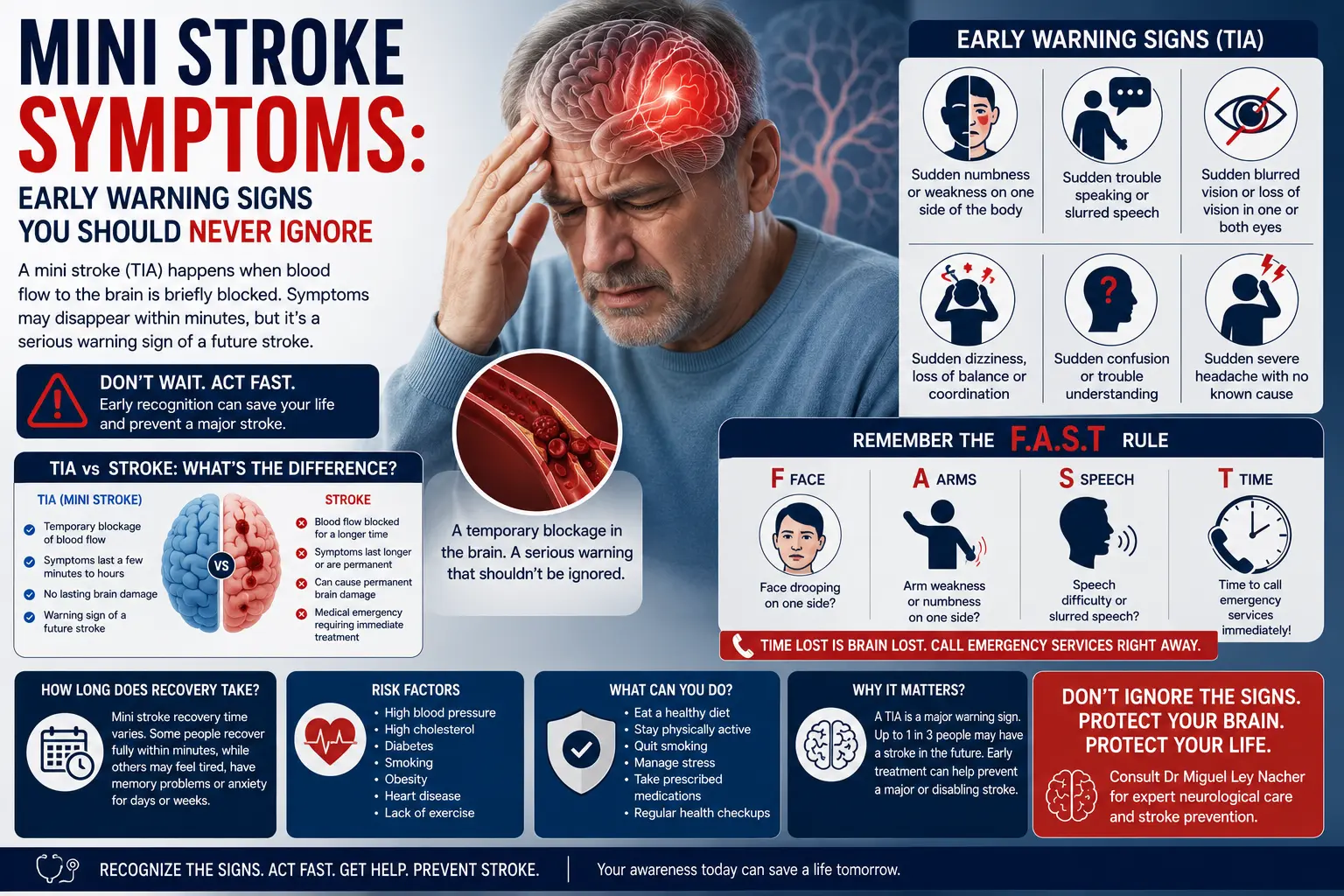
Many people brush off sudden dizziness, slurred speech, or numbness when the symptoms fade within a few minutes. But these short-lived changes may be the body’s way of warning you about a transient ischemic attack, commonly known as a mini stroke. Paying attention to these early signs and seeking medical help in time can reduce the risk of a more serious stroke in the future. Recognizing mini stroke symptoms early can make a life-saving difference for both patients and their families.
Understanding the warning signs of stroke-related numbness may help people seek emergency care before symptoms become severe.
A transient ischemic attack happens when blood flow to the brain is briefly blocked. Unlike a major stroke, the blockage clears quickly, and symptoms may vanish within minutes or hours. Even though the effects are temporary, doctors consider it a serious warning sign. Many people who experience transient ischemic attack symptoms go on to have a full stroke within days or months if they do not seek treatment.
One of the biggest dangers is that people often dismiss the episode because they start feeling normal again. Learning the early stroke warning signs can help individuals react quickly instead of delaying medical attention. A TIA should always be treated as an emergency because the brain is still affected, even if the symptoms are short-lived.
Doctors often describe the difference between a TIA and a stroke by looking at how long the symptoms last and how much damage occurs. A transient ischemic attack (TIA) temporarily blocks blood flow to the brain, causing symptoms that usually disappear within a short time. A stroke, on the other hand, can lead to lasting damage to brain tissue. Even though the effects of a TIA may fade quickly, both conditions should be treated as medical emergencies because they often begin with the same warning signs.
Learning the difference between stroke symptoms and temporary neurological episodes can help patients react more quickly during emergencies.
Some of the most common mini stroke symptoms include sudden numbness in the face, arm, or leg, especially on one side of the body. A person may suddenly have trouble speaking clearly, feel unsteady while walking, notice blurred vision, or become confused for no obvious reason. Even if these symptoms last only a few minutes, they should not be ignored, as they may signal a problem with blood flow to the brain that could lead to a more serious medical emergency.
Early Stroke Warning Signs You Should Never Ignore
Healthcare experts often advise people to pay attention to stroke warning signs before stroke develops into a larger medical crisis. Signs such as facial drooping, weakness in one arm, or sudden difficulty speaking should always be treated as a medical emergency. Getting medical help quickly can lower the risk of lasting brain damage and greatly improve recovery and overall health outcomes.
How Long Does Mini Stroke Recovery Take?
Many individuals are surprised when doctors discuss mini stroke recovery time because recovery can vary from person to person. Some people start feeling normal again within a few minutes, while others may continue to deal with tiredness, memory problems, or emotional stress for days afterwards. Recovery often depends on how quickly treatment is received and how well underlying health conditions like high blood pressure or diabetes are controlled.
Who Is at Risk of a Transient Ischemic Attack (TIA)?
Understanding the risk factors is another important step in prevention. Smoking, obesity, uncontrolled blood pressure, high cholesterol, diabetes, and lack of exercise all increase the chances of reduced blood flow to the brain. People with heart disease or irregular heart rhythms are also more likely to experience transient ischemic attack symptoms during their lifetime.
Early Stroke Warning Signs
Family members should also learn the early stroke warning signs because they are often the first to notice unusual behavior. If a person suddenly becomes confused, is unable to lift one arm, or has trouble speaking clearly, emergency medical help should be called right away. Responding quickly can help stop a minor episode from developing into a severe or disabling stroke.
Recognizing when to see a neurologist after sudden neurological symptoms may help reduce long-term complications.
TIA vs Stroke Difference
Doctors may use brain scans, blood tests, and heart evaluations to determine the cause of a TIA. Treatment often includes blood-thinning medications, lifestyle changes, and regular monitoring of blood pressure and cholesterol levels. During this process, physicians usually explain the TIA vs stroke difference so patients understand why early intervention matters.
For many patients, the emotional impact of a TIA can be just as difficult as the physical symptoms. Anxiety about future health problems is common after experiencing mini stroke symptoms for the first time. Some people become fearful of driving, working, or being alone because they worry another episode could occur unexpectedly.
The good news is that healthy lifestyle habits can greatly reduce the chances of future episodes. Following a balanced diet, staying physically active, quitting smoking, and limiting alcohol consumption all support better blood circulation and overall heart health. Regular medical checkups are also important, especially for people who have previously experienced warning signs, as early care can help prevent a more serious stroke later on.
Managing underlying neurological and vascular conditions also plays an important role in reducing stroke risk.
Many patients ask about mini stroke recovery time because they want to know whether life can return to normal after the episode. In many situations, people recover successfully with timely medical care, healthy lifestyle changes, and preventive treatment. Still, feeling better should not lead to ignoring future risks, as a mini stroke can be an early warning sign of a more serious stroke later on. A TIA is still a warning that the brain and blood vessels need immediate attention.
Ignoring transient ischemic attack symptoms can have serious consequences. Studies show that the risk of a major stroke is highest within the first 48 hours after a TIA. That is why emergency evaluation is critical, even if the symptoms disappear quickly and the person feels completely fine afterward.
It is equally important for younger adults to understand the early stroke warning signs because TIAs are no longer limited to older individuals. Stress, unhealthy eating habits, smoking, and sedentary lifestyles are increasing stroke risks in younger populations across the world.
Many people misunderstand the TIA vs stroke difference and assume a TIA is harmless because the symptoms are temporary. In reality, a TIA should be viewed as a major warning from the body. Seeking fast medical care can dramatically reduce the likelihood of a future stroke.
When talking about prevention, doctors often stress the importance of identifying mini stroke symptoms early and seeking medical attention immediately. Every minute is critical because the brain relies on a steady supply of blood and oxygen to function properly. Delaying treatment can increase the risk of a minor episode turning into a serious or life-threatening condition.
Understanding the warning signs before a stroke happens can make a life-saving difference. If you or someone nearby suddenly experiences numbness, confusion, dizziness, or trouble speaking, seek emergency medical care right away. Acting quickly can improve recovery chances and help prevent serious complications. Doctors also encourage patients to monitor mini stroke recovery time closely so they can identify lingering complications early.
How Dr Miguel Ley Nacher Can Help You Understand
Learning about the symptoms of a transient ischemic attack and discussing them with family members can help people respond more quickly during a medical emergency. Healthcare professionals continue spreading awareness about early stroke warning signs because recognizing the symptoms in time can reduce the risk of long-term disability and save lives. Understanding the TIA vs stroke difference also helps people realize why immediate treatment is necessary, even when symptoms fade quickly. Paying attention to mini stroke recovery time and following medical advice afterward can also help reduce future risks and support long-term brain health. Recognizing stroke warning signs before stroke becomes severe may ultimately save a life.
If you or someone nearby suddenly experiences numbness, confusion, dizziness, facial drooping, or difficulty speaking, seek emergency medical attention immediately. Early neurological evaluation can help reduce the risk of a major stroke and improve recovery outcomes. Consult Dr Miguel Ley Nacher for expert neurological care.
FAQs - Frequently Asked Questions
Q1. Can a mini stroke happen without warning?
Ans – Yes, a mini stroke can occur unexpectedly. Symptoms such as sudden dizziness, numbness, confusion, or trouble speaking may appear without any prior signs. Even if the symptoms fade quickly, medical attention is still important.
Q2. Is a mini stroke a sign of a major stroke coming?
Ans – In many cases, a mini stroke can be an early warning sign of a future stroke. It suggests that blood flow to the brain was briefly interrupted, which may increase the risk of a more serious event later.
Q3. Can you have a mini stroke and not know it?
Ans – Yes, some people may not realise they had a mini stroke because the symptoms are mild or disappear within a short time. Brief confusion, temporary weakness, or slight speech difficulty can sometimes be mistaken for exhaustion or stress.
Q4. What should I do after experiencing TIA symptoms?
Ans – You should seek medical care immediately after noticing possible TIA symptoms, even if you feel better afterwards. Early evaluation can help doctors identify the cause and reduce the risk of another stroke.
Q5. How soon after a mini stroke can a major stroke occur?
Ans – A major stroke may happen within hours, days, or weeks after a mini stroke. The risk is often highest shortly after the first episode, which is why quick treatment is so important.
Q6. Are mini strokes permanent or reversible?
Ans – Mini stroke symptoms are usually temporary and often improve once blood flow returns to normal. However, they should still be taken seriously because they can signal a higher risk of future strokes.
Q7. Can stress or anxiety trigger a mini stroke?
Ans – Stress and anxiety may not directly cause a mini stroke, but they can contribute to conditions like high blood pressure and poor heart health, which are known stroke risk factors.
Q8. Do mini strokes show up on MRI or CT scan?
Ans – Sometimes a mini stroke can appear on an MRI scan, especially if there are small changes in brain tissue or blood flow. CT scans may not always detect a TIA, but doctors often use imaging tests to rule out other serious conditions.
Related Services
Recent Blogs
Book An Appointment
About the author

Dr. Miguel Ley Nacher, MD, MSc, PhD
Consultant Neurologist & Epilepsy Specialist
MD, MSc, PhD
Consultant Neurologist
Specialist in Epilepsy & Neurophysiology
17+ Years of Experience
Al Zahra Hospital Dubai
Dr. Miguel Ley Nacher is an internationally trained Consultant Neurologist and clinical psychologist with extensive expertise in epilepsy, stroke management, movement disorders, and advanced neurophysiology. With over 17 years of experience, he is recognized for delivering evidence-based neurological care focused on accurate diagnosis, advanced treatment techniques, and long-term patient wellbeing.
He completed his medical education and specialized neurology training in Spain, followed by advanced epilepsy fellowship training in the United States at Rush University Medical Center, Chicago. Dr. Miguel also holds a Master of Science (MSc) degree and a PhD in Biomedicine, reflecting his strong academic and research background in neurological sciences.
Dr. Miguel specializes in epilepsy management, long-term video EEG monitoring (VEEG), stroke care, headaches and migraines, Parkinson’s disease, multiple sclerosis, dementia, peripheral neuropathies, and neuromodulation therapies. His approach combines advanced neurological expertise with compassionate, patient-centered care tailored to each individual’s condition and treatment goals.
He is an active member of leading international neurological organizations, including the American Academy of Neurology (AAN), American Epilepsy Society (AES), European Academy of Neurology (EAN), and the International League Against Epilepsy (ILAE).
Medical Disclaimer
This article is intended for informational and educational purposes only and should not be considered medical advice, diagnosis, or treatment. Always consult a qualified healthcare professional regarding any neurological symptoms or medical concerns before making healthcare decisions. Medically reviewed by Dr. Miguel Ley Nacher, Consultant Neurologist & Epilepsy Specialist.